As a supplier of automotive castings, I’ve witnessed firsthand the critical role these components play in the automotive industry. The strength of automotive castings is a multifaceted characteristic that significantly impacts the performance, safety, and durability of vehicles. In this blog, I’ll delve into the various factors that influence the strength of automotive castings, drawing on my years of experience in the field. Automotive Castings

Material Selection
The choice of material is perhaps the most fundamental factor affecting the strength of automotive castings. Different materials possess distinct mechanical properties, such as tensile strength, yield strength, and hardness. Common materials used in automotive castings include cast iron, steel, aluminum, and magnesium alloys.
Cast iron is known for its high strength, excellent wear resistance, and good castability. It is often used in applications where high strength and stiffness are required, such as engine blocks, cylinder heads, and brake components. Gray cast iron, in particular, is widely used due to its good damping capacity, which helps reduce vibration and noise in the engine.
Steel castings offer superior strength and toughness compared to cast iron. They are commonly used in high-stress applications, such as transmission components, suspension parts, and steering knuckles. The high strength of steel castings allows them to withstand heavy loads and extreme operating conditions.
Aluminum alloys are lightweight and have good corrosion resistance, making them ideal for applications where weight reduction is crucial, such as engine blocks, cylinder heads, and wheels. Despite their lower density, aluminum alloys can achieve high strength through alloying and heat treatment.
Magnesium alloys are the lightest of the commonly used metals in automotive castings. They offer excellent strength-to-weight ratios and are increasingly being used in the automotive industry to reduce vehicle weight and improve fuel efficiency. However, magnesium alloys are more expensive and have lower corrosion resistance compared to aluminum alloys.
Casting Process
The casting process used to produce automotive castings also has a significant impact on their strength. There are several casting processes available, each with its own advantages and limitations.
Sand casting is the most common casting process used in the automotive industry. It involves pouring molten metal into a sand mold, which is then removed after the metal has solidified. Sand casting is relatively inexpensive and can produce complex shapes, but it may result in castings with lower dimensional accuracy and surface finish compared to other casting processes.
Die casting is a high-pressure casting process that involves injecting molten metal into a steel die. Die casting produces castings with high dimensional accuracy, excellent surface finish, and good mechanical properties. However, it is more expensive than sand casting and is typically used for high-volume production of small to medium-sized castings.
Investment casting, also known as lost-wax casting, is a precision casting process that involves creating a wax pattern of the casting, coating the wax pattern with a ceramic shell, and then melting the wax out of the shell. The molten metal is then poured into the ceramic shell to form the casting. Investment casting produces castings with high dimensional accuracy, excellent surface finish, and complex shapes, but it is more expensive than sand casting and die casting.
The choice of casting process depends on several factors, including the complexity of the casting, the required dimensional accuracy and surface finish, the production volume, and the cost. By selecting the appropriate casting process, it is possible to produce automotive castings with the desired strength and quality.
Heat Treatment
Heat treatment is a critical step in the production of automotive castings that can significantly improve their strength and other mechanical properties. Heat treatment involves heating the castings to a specific temperature and then cooling them at a controlled rate to achieve the desired microstructure and properties.
Annealing is a heat treatment process that involves heating the castings to a high temperature and then cooling them slowly to relieve internal stresses and improve ductility. Annealing is often used for castings that require good machinability or for components that will be subjected to further forming operations.
Quenching and tempering is a heat treatment process that involves heating the castings to a high temperature and then rapidly cooling them in a quenching medium, such as water or oil, to harden the material. The castings are then tempered at a lower temperature to reduce the brittleness and improve the toughness. Quenching and tempering is commonly used for castings that require high strength and hardness, such as gears, shafts, and crankshafts.
Solution treatment and aging is a heat treatment process that involves heating the castings to a high temperature to dissolve the alloying elements in the material and then rapidly cooling them to achieve a supersaturated solid solution. The castings are then aged at a lower temperature to precipitate the alloying elements and improve the strength and hardness. Solution treatment and aging is commonly used for aluminum and magnesium alloys to improve their mechanical properties.
The heat treatment process must be carefully controlled to ensure that the castings achieve the desired strength and other mechanical properties. Factors such as the heating and cooling rates, the temperature, and the duration of the heat treatment can all affect the microstructure and properties of the castings.
Design Considerations
The design of automotive castings also plays a crucial role in their strength. A well-designed casting can minimize stress concentrations, improve the distribution of loads, and enhance the overall performance of the component.
One of the key design considerations in automotive castings is the use of uniform wall thickness. Uneven wall thickness can result in uneven cooling rates during the casting process, which can lead to internal stresses, shrinkage defects, and reduced strength. By maintaining a uniform wall thickness, it is possible to minimize these problems and improve the quality and strength of the castings.
Another important design consideration is the use of fillets and radii at corners and edges. Sharp corners and edges can act as stress concentrators, which can lead to cracking and failure of the castings under load. By using fillets and radii, it is possible to distribute the stress more evenly and reduce the risk of failure.
The design of the casting should also take into account the intended use of the component and the operating conditions it will be subjected to. For example, components that will be subjected to high loads or vibrations should be designed to have sufficient strength and stiffness. Similarly, components that will be exposed to corrosive environments should be designed to have good corrosion resistance.
Quality Control
Quality control is an essential part of the production process for automotive castings. It ensures that the castings meet the required specifications and standards and have the desired strength and other mechanical properties.
Quality control begins with the selection of high-quality raw materials. The materials should be inspected and tested to ensure that they meet the required chemical composition and mechanical properties. During the casting process, the temperature, pressure, and other process parameters should be carefully monitored and controlled to ensure that the castings are produced consistently and with the desired quality.
After the castings are produced, they should be inspected and tested to ensure that they meet the required dimensional accuracy, surface finish, and mechanical properties. Non-destructive testing methods, such as ultrasonic testing, radiography, and magnetic particle inspection, can be used to detect internal defects and ensure the integrity of the castings. Destructive testing methods, such as tensile testing, hardness testing, and impact testing, can be used to determine the mechanical properties of the castings.
By implementing a comprehensive quality control program, it is possible to ensure that the automotive castings produced meet the highest standards of quality and reliability.
Conclusion
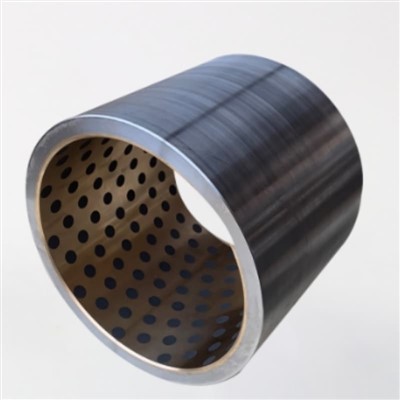
The strength of automotive castings is influenced by a variety of factors, including material selection, casting process, heat treatment, design considerations, and quality control. As a supplier of automotive castings, it is my responsibility to ensure that the castings we produce meet the highest standards of quality and performance. By carefully considering these factors and implementing best practices in the production process, we can produce automotive castings that are strong, durable, and reliable.
Agricultural Machinery Parts If you are in the market for high-quality automotive castings, I invite you to contact us to discuss your specific requirements. Our team of experienced engineers and technicians can work with you to develop custom solutions that meet your needs and exceed your expectations. We are committed to providing our customers with the best possible products and services, and we look forward to the opportunity to work with you.
References
- Campbell, J. (2003). Castings. Butterworth-Heinemann.
- Kalpakjian, S., & Schmid, S. R. (2013). Manufacturing Engineering and Technology. Pearson.
3.ASM Handbook, Volume 15: Casting. ASM International.
Qingzhou Shengchen Machinery Technology Co., Ltd.
As one of the leading automotive castings manufacturers and suppliers in China, we warmly welcome you to buy discount automotive castings for sale here and get free sample from our factory. If you have any enquiry about customized service, please feel free to email us.
Address: Industrial Park, Mihe Town, Qingzhou City, Weifang, Shandong Province
E-mail: gjywb@qzsckj.cn
WebSite: https://www.sc-casting.com/
