If you’ve ever spent time in a rural community—whether helping a family member haul water from a well, sitting in on a town hall meeting about local water quality, or even just listening to a neighbor complain about discolored tap water—you know how much access to safe, reliable drinking water means. As a high rejection reverse osmosis (RO) membrane supplier, I get asked this question all the time: Can our product work in a rural water treatment system? It’s not a simple yes or no answer, but after years of working with small towns, farm communities, and remote villages across the U.S. and parts of Latin America and Southeast Asia, I can tell you that with the right context, a high rejection RO membrane isn’t just a fit—it’s often the solution rural communities didn’t know they needed. High Rejection RO Membrane
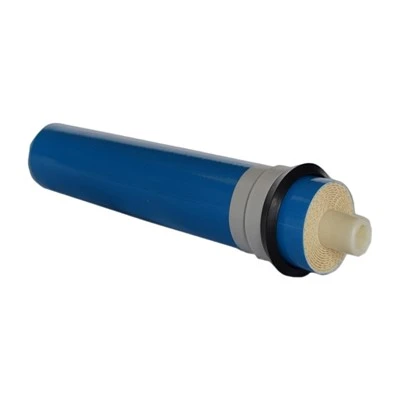
Let’s start with the basics, because terms like “high rejection” can sound like industry jargon until you break it down. Standard RO membranes, which have been around for decades, are designed to remove around 95-98% of common contaminants like sodium, chloride, and total dissolved solids (TDS). A high rejection RO membrane, by contrast, typically hits 99.5% or higher for those same parameters, and is even more effective at smaller, harder-to-treat contaminants like nitrates, heavy metals (lead, arsenic, uranium), per- and polyfluoroalkyl substances (PFAS), and bacteria cysts. For rural areas, where water sources are often untreated groundwater, shallow wells, or surface water exposed to agricultural runoff and old infrastructure, that level of performance isn’t a luxury—it’s a necessity.
I remember a project we worked on three years ago with a small community in central Iowa, population 1,200. The town’s water source was a set of private and public wells that had been testing high for nitrates from nearby corn and soybean farms, plus occasional spikes in E. coli after heavy rains. Local officials had been researching RO systems for years, but had written off standard membranes because of two big concerns: cost and maintenance. They were under the impression that high rejection membranes would be too expensive to operate and too high-maintenance for a small, part-time water staff. I’ll be honest, that’s a common misconception, and it’s rooted in the fact that many suppliers still sell RO systems designed for big urban utilities—systems with constant chemical cleaning, large power demands, and parts that require specialized techs to replace. Our high rejection RO membranes are built specifically for small-scale, rural applications, and that’s what made the difference in Iowa.
First, let’s talk about cost, because rural budgets are tight—we get that. I hear all the time that “we can’t afford that” from town managers who are working with state grants that cover only a fraction of the cost. But here’s the thing: high rejection RO membranes actually have a lower long-term cost of ownership than standard membranes in many rural cases. Why? Because they last longer. A standard RO membrane might need to be replaced every two to three years in groundwater with high levels of total organic carbon (TOC) or other foulants. Our high rejection membranes, which use a polyamide thin-film composite designed to resist fouling, often last four to five years with proper, simple maintenance. That means fewer replacement costs, less downtime, and less time spent coordinating with suppliers to get parts shipped to a rural location—something that’s a huge hassle for small towns that don’t have access to overnight shipping or local supply stores for industrial parts.
Plus, the energy use is comparable to standard RO. A lot of people assume that because high rejection membranes need more pressure to push water through the tighter pores, they’ll use way more electricity. But modern high rejection membranes are engineered with low-energy design, so the pressure gap is minimal—only a few PSI, which translates to almost no difference in monthly utility bills for a small system. In the Iowa town we worked on, their monthly water bill for a family of four went up by less than $12 after installing our RO system, and that included all maintenance and membrane replacement costs. That’s a number most rural households can swallow, especially when you consider that before the RO system, families were either hauling bottled water for drinking and cooking (which costs $5-$10 a gallon in some parts of rural Iowa) or dealing with the health risks of nitrates.
Next, let’s talk about maintenance. For rural communities, most water systems are staffed by part-time employees who have other jobs—one I talked to in southern Ohio was a retired mechanic who took the water supervisor role for $15 an hour. They don’t have time for complex cleaning routines or specialized training. Our high rejection RO membrane system comes with a pre-treatment module that’s simple to operate: a sediment filter to catch dirt, a carbon filter to remove chlorine (which can damage RO membranes), and a cartridge filter that only needs changing every six months. The membrane itself only needs a deep chemical clean once a year, and we provide video tutorials and a 20-minute phone training session for the water staff—no expensive on-site visits required. In that Iowa town, their part-time water guy does all the maintenance on a Saturday morning, and he’s never had to call us for urgent issues. That’s a huge win for communities that can’t afford to have their water system down for even a day.
Of course, high rejection RO membranes aren’t a one-size-fits-all solution. I’ve seen projects where they didn’t work as well as expected, almost always because the pre-treatment was mismatched to the water source. For example, if a rural community has surface water with high levels of silt and clay, you can’t skip a proper sediment pre-filter—even a fouling-resistant high rejection membrane will clog quickly if you don’t remove the large particles first. That’s why our process starts with a water test, done at no cost to the community, where we test for TDS, nitrates, heavy metals, bacteria, and foulants in their specific water source. We then design a system that pairs the right high rejection membrane with pre-treatment tailored to their needs, not a generic system pulled off a shelf.
I’ll give another example: a remote village in Guatemala, population 800, that relied on a river for drinking water. The river had high levels of arsenic and fluoride, which are common in many rural aquifers around the world, plus parasites that cause giardia and cryptosporidium. The village had tried a standard RO system three years before, but it failed because it couldn’t remove the arsenic and fluoride at consistent levels, and it needed cleaning every three months—something the village’s only water caretaker, a local farmer with no formal training, couldn’t keep up with. We installed our high rejection RO system with a custom pre-treatment that included a slow sand filter to remove sediment and a small UV system to kill bacteria. Three years later, that system is still running, and the village has tested at less than 10 parts per billion (ppb) of arsenic, well under the WHO limit of 10 ppb, and fluoride levels at 0.5 ppm, which is ideal for dental health. The membrane is still going strong, with only one deep clean a year.
One of the biggest myths I hear is that high rejection RO membranes produce too much wastewater (the “reject” stream of concentrated contaminants that gets drained away) for rural communities that have limited access to septic systems or limited water supplies. That’s simply not true with modern technology. Our high rejection RO systems for small-scale applications have a recovery rate of up to 85%, meaning only 15% of the water is lost as reject. Compare that to older RO systems that might only have a 50% recovery rate, and that’s a huge difference. In areas where water is scarce, we can even pair the system with a small reuse module that sends the reject stream to irrigate local parks or farm fields—turning waste water into a resource instead of a burden. In the Iowa town, they use the reject stream to water the town’s baseball field and community garden, so they don’t have to pay to dispose of it, and it’s been a hit with local farmers who use it for their crops during dry spells.
Now, let’s address the elephant in the room: health. Rural communities are often more vulnerable to water contaminants because they don’t have the same oversight as urban utilities. A 2022 study from the Environmental Working Group found that 53% of rural water systems in the U.S. are contaminating drinking water with levels of nitrates, lead, or PFAS that exceed federal limits. High rejection RO membranes are one of the only treatment technologies that can remove almost all of these contaminants, including the “forever chemicals” PFAS, which have become a huge issue in rural areas near military bases or industrial farms. Unlike activated carbon filters, which can get overwhelmed if contaminant levels are too high, or distillation systems that use too much energy for small communities, high rejection RO membranes are consistent, reliable, and meet EPA standards for all regulated contaminants.
I know what some of you are thinking: What about parts availability? If I’m in a small town in Montana, can I actually get replacement filters or a new membrane when I need it? As a supplier that specializes in rural applications, we’ve built a network of local distributors across the U.S., and we ship replacement parts within 48 hours anywhere in the country. For international projects, we work with local partners to stock parts in regional hubs, so you don’t have to wait weeks for a membrane to be shipped from overseas. We also offer a remote monitoring service for systems that have internet access, which sends alerts if the pressure drops or the water quality changes, so the water staff can fix small issues before they become big problems—no need to drive hours to check on the system.
Of course, high rejection RO membranes aren’t the right choice for every rural community. If a town’s water source is only high in TDS and has no other contaminants, a standard RO membrane might be sufficient and cheaper upfront. But for any community dealing with nitrates, heavy metals, PFAS, or bacteria, high rejection is the better long-term investment. We recently worked with a small town in Vermont that had chosen a standard RO system to save $5,000 upfront, but within a year, the membrane was fouled and they had to replace it early, costing them $8,000 total. They then switched to our high rejection membrane system, and three years later, they’ve only spent $3,000 on maintenance and one membrane replacement. It’s a classic case of paying a little more upfront to save a lot in the long run.
At the end of the day, the question isn’t just “Can a high rejection RO membrane be used in a rural area?” It’s “Can it solve the specific water challenges that rural communities face?” And the answer is yes—if you pair it with the right pre-treatment, simple maintenance protocols, and support that fits a small, part-time staff. I’ve seen it work in places that would have been written off as too remote or too low-budget for advanced water treatment. I’ve seen kids in Iowa drinking water that’s safe for them to play in and cook with, I’ve seen a village in Guatemala stop getting sick from giardia, I’ve seen town councils avoid costly boil-water orders that would hurt local businesses.
If you’re a rural town manager, a county extension agent, a farm owner, or anyone working to improve water quality in a rural community, I encourage you to reach out. We don’t sell one-size-fits-all systems, we work with you to test your water, design a system that fits your budget, and provide the training and support you need to keep it running. Let’s stop treating rural water treatment like an afterthought. High rejection RO membranes aren’t just for big cities or industrial applications—they’re for communities that deserve access to safe, reliable drinking water, no matter where they are.
RO Water System References
- U.S. Environmental Protection Agency. (2021). Reverse Osmosis for Small Community Water Systems. EPA Office of Water.
- Environmental Working Group. (2022). Rural Water Contamination Report: Unregulated Contaminants in Private Wells. EWG Research & Analysis.
- World Health Organization. (2020). Guidelines for Drinking-water Quality, 4th ed. WHO Press.
- American Water Works Association. (2019). Small System RO Treatment: Best Practices for Maintenance and Operation. AWWA Publication.
- National Rural Water Association. (2021). Cost-Benefit Analysis of High-Rejection RO Membranes for Groundwater Treatment. NRWA Technical Report.
Fujian Huamo Technology Co., Ltd.
Fujian Huamo Technology Co., Ltd. is one of the most professional high rejection ro membrane manufacturers and suppliers in China, featured by quality products and good service. Please rest assured to wholesale the best high rejection ro membrane made in China here and get price list from our factory. Contact us for custom service and OEM service.
Address: No.6 Hengtong Rd, Shanmei Village, Xiamei Town, Nanan City, Fujian Province, China
E-mail: info@huaromembrane.com
WebSite: https://www.hmromembrane.com/
