If you’ve ever walked through a warehouse, loading dock, or retail distribution center, chances are you’ve seen a manual pallet truck doing the heavy lifting. As a supplier who’s spent the last 12 years working with businesses across construction, food and beverage, and e-commerce, I’ve lost count of how many times a customer has walked up to our counter or emailed asking, “What kind of manual pallet truck do I actually need for my space?” It’s a fair question—there’s no one-size-fits-all model, and picking the wrong one can turn a simple pallet move into a backache or a damaged load. Today, I’m breaking down the most common types of manual pallet trucks you’ll come across, plus what makes each one useful for different jobs. Manual Pallet Truck
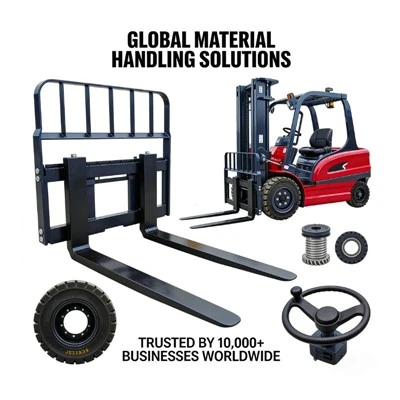
First, let’s start with the basics: a standard manual pallet truck, also called a pump truck or pallet jack, is a simple tool. It has a metal frame, two forks that slide under a pallet, a hydraulic pump to lift the forks off the ground, and a handle you push or pull to move it. It’s designed for short, flat moves—usually 50 to 100 feet between a loading dock and a truck, or from a stock room to a shelf. But what most people don’t know is that the “standard” model is just the starting point. There are specialized versions built for tight spaces, heavy loads, uneven floors, and even specific industries like grocery or manufacturing.
Let’s talk about the type I sell more than any other: the standard or general-duty manual pallet truck. This is the workhorse for most small to mid-sized warehouses and retail storerooms. It’s built to handle loads up to 5,500 pounds, which is enough for most standard pallets of boxed goods, office supplies, or non-perishable groceries. The forks on a standard model are usually 48 inches long, which fits the most common 40-by-48-inch pallets used in North America. The handle is designed with a 180-degree swivel, so you can maneuver it in aisles as narrow as 5 feet—perfect for small retail back storerooms that don’t have a lot of extra space. I remember a customer from a local grocery chain coming to me three years ago, saying their old pallet jack kept getting stuck in the narrow aisles between the canned goods and dry pasta. We swapped their old model for a standard general-duty one with shorter tines (wait, tines is another word for the forks—good to know) that fit their smaller aisle space, and they said it cut their pallet moving time by almost 20%. That’s the thing about standard models: they’re reliable, affordable, and work for 70% of the jobs we get asked about.
Next up, heavy-duty manual pallet trucks. These are built for jobs that demand more strength. If you’re moving loads over 6,000 pounds—think steel bars, large machinery parts, or full pallets of concrete blocks— a standard model won’t cut it. Heavy-duty pallet trucks are reinforced with thicker steel frames, upgraded hydraulic pumps, and sometimes reinforced tines that can handle up to 10,000 pounds. We sell a lot of these to construction supply yards and manufacturing facilities. Last year, a metal fabrication company came to us after their old pallet jack bent under a load of 8,000 pounds of steel sheets. Their team didn’t want to invest in a powered pallet jack because they only move heavy loads a few times a week, so the heavy-duty manual model was the perfect fit. It’s also worth noting that heavy-duty models usually have larger wheels to distribute the extra weight, which reduces wear on the floor and makes it easier to maneuver even when loaded down. The tradeoff? They’re a bit bulkier, so they don’t work well in super tight spaces. If your aisles are less than 6 feet wide, a heavy-duty model might be too wide, so it’s important to measure your space before picking one.
Now, a type that’s been a game-changer for businesses with limited space: the narrow-aisle manual pallet truck. As e-commerce gets bigger, more warehouses are using compact storage systems with aisles that are only 4 to 5 feet wide—too small for standard pallet jacks. Narrow-aisle models have shorter tines (usually 36 to 42 inches) and a more compact frame, plus a handle that lets you make tighter turns without catching on shelves or other equipment. Some narrow-aisle models also have a “low-profile” option, which means the forks sit closer to the ground when lowered. That’s useful for pallets that have been damaged or have uneven bottom boards, because the forks can slide under them even if they’re not perfectly level. I work with a lot of small online sellers who run their operations out of shared warehouses, where every inch of aisle space is valuable. A few months ago, a customer selling handmade furniture came to us saying their standard pallet jack kept hitting the storage racks in their shared space, damaging both the racks and their wooden furniture pieces. We recommended a narrow-aisle model, and they told me it solved their problem immediately—now they can move their pallet of chairs without worrying about dents or scraped racks.
Another specialized type is the low-profile manual pallet truck. Wait, I mentioned low-profile earlier as a feature, but it’s actually a separate model for very specific jobs. A standard manual pallet truck’s forks usually lower to about 3 inches off the ground, but low-profile models lower to as little as 1.5 inches. That might sound small, but it’s a huge difference for loads that sit very close to the ground—like pallets of carpet rolls, large bags of grain, or damaged pallets that are only an inch or two off the floor. A lot of food and beverage suppliers use these because they often have pallets of frozen food or dairy that can sag in the middle, making them harder to get under with a standard jack. I had a customer from a frozen food distributor come to me last winter, saying they were losing half a day’s work every week because their team couldn’t get a pallet of frozen turkeys to slide under their old jack. The low-profile model we sold them let them lift those low-sagging pallets without damaging the product, and they said it saved them around $1,200 a month in lost time and damaged goods. That’s the kind of small, impactful tool that a lot of businesses don’t know exists until they need it.
Let’s not forget about the extra-long manual pallet truck, which is designed for specialized pallets. Most pallets are 48 inches long, but some industries use longer pallets—like lumber yards, where they have 96-inch pallets for 8-foot 2x4s, or appliance stores, where they have 60-inch pallets for refrigerators or washing machines. Standard 48-inch forks won’t fit these longer pallets, so an extra-long model with forks that are 72 to 96 inches long is necessary. We also sell these to moving companies, which often use oversized pallets for furniture during a house move. A few months back, a local moving company came to us, saying their team was having to tie down pallets of large items because their old pallet jack’s forks were too short to support the full length of the appliance pallets. We set them up with a set of extra-long manual pallet trucks, and they told me it reduced the number of times they had to re-secure loads on the road by 80%. The key here is to not just go longer, but to make sure the extra-long model has a stable base—otherwise, you risk tipping a heavy load while moving it.
There’s one more type that I don’t get asked about as often, but it’s super useful for businesses that work in tight, uneven, or outdoor spaces: the rough-terrain manual pallet truck. Most manual pallet trucks are designed for smooth, flat concrete or asphalt, but if you’re working on gravel, grass, or dirt, a standard model’s small wheels will get stuck or damage the surface. Rough-terrain models have large, pneumatic rubber wheels (like small bike tires) that can roll over small rocks, uneven dirt, or uneven warehouse floors. They’re also built with a more powerful hydraulic pump to lift loads on slightly uneven ground. We sell a lot of these to landscape suppliers, construction companies that have outdoor storage yards, and event planners who need to move pallets of tents, chairs, or stage equipment across grass or gravel. Last year, a local event planning company rented a standard pallet jack for a wedding setup, and it got stuck in the grass when they were moving pallets of table linens. They bought a rough-terrain model after that, and they said it’s been their go-to for all outdoor event setups ever since.
Now, I should mention a few features that are standard across most good manual pallet trucks, no matter the type. First, the wheels: there are two main types—polyurethane wheels for indoor use (they’re quiet and don’t scratch concrete) and rubber wheels for outdoor or rough surfaces. You want to pick the right type for your space, because using polyurethane wheels on gravel will wear them out quickly. Second, the handle: look for a handle that’s ergonomically designed, with a comfortable grip and a control lever that’s easy to reach. A bad handle can cause wrist pain or back strain, especially if you’re using the pallet jack for 8 hours a day. Third, the load capacity: never buy a pallet jack with a lower capacity than you need. It might seem like a good deal, but if you overload it, you can bend the frame, break the hydraulic pump, or even get hurt when the load falls.
I’ve been in this business long enough to know that there’s no “best” manual pallet truck—only the best one for your specific needs. If you’re a small retail store moving standard pallets in a 6-foot-wide back room, a general-duty model is perfect. If you’re moving heavy construction materials across a gravel yard, you need a rough-terrain or heavy-duty model. If you’re an e-commerce seller in a shared warehouse with tight aisles, a narrow-aisle model will save you a lot of headaches.
At the end of the day, the right manual pallet truck is an investment that saves you time, money, and prevents injuries. I’ve seen too many businesses cut corners and buy the cheapest model they can find, only to have to replace it in a year because it’s worn out or doesn’t fit their needs. We work with every type of business, from small mom-and-pop shops to large manufacturing facilities, and we help them find the exact model that fits their space and budget. If you’re tired of dealing with a pallet jack that gets stuck, can’t lift your loads, or damages your products or floors, I’d love to talk to you about what you need. We offer competitive pricing, warranties on all our models, and we can help you pick the right one for your specific use case. Don’t hesitate to reach out to us to discuss your requirements and find the perfect manual pallet truck for your operation.
Lift Platform References
Material Handling Industry Association. (2022). Manual Pallet Truck Standards and Specifications.
OSHA. (2021). Guidelines for Manual Material Handling in Warehouses.
Industrial Truck Association. (2023). Types and Applications of Manual Lift Trucks.
National Retail Federation. (2022). Warehouse Equipment Recommendations for Small Retail Businesses.
Huazheng Heavy Industry Machinery Equipment Co., Ltd.
With abundant experience, we are one of the most professional manual pallet truck manufacturers and suppliers in China. Please feel free to buy high quality manual pallet truck for sale here from our factory. We also accept customized orders.
Address: Room 423-101, Building C-4, Electronics Valley Technology Center, No.3088 Lekai North Street, Gaokai District, Baoding City, Hebei Province, China
E-mail: sales02@hzheavy.com
WebSite: https://www.hzheavy.com/
