Let’s cut to the chase. If you’ve ever walked into a zoology lecture hall or a K-12 science classroom and seen a tattered, foam dinosaur that looks like it’s been chewed by a goldfish, you know exactly what I’m talking about. That’s the old “animal model” game—something that’s so obviously not real, it’s almost useless for actually teaching anyone. For the last 8 years, I’ve run this small business making educational and realistic animal models for schools, universities, and museums, and the number of questions I get isn’t just “how much does this cost?” It’s “why does this even matter when we have Google and YouTube?” That’s the question I want to unpack today—because when it comes to zoology education, realistic animal models aren’t just nice-to-haves. They’re irreplaceable tools that fix the gaps every online video and textbook can’t touch. Educational & Realistic Animal Models
First, let’s be real: I love the internet as much as the next person. I binge nature docs on Netflix when I need to unwind, and my 10-year-old niece can rattle off jaguar subspecies faster than I can pour a cup of coffee. But here’s the thing—most of what we see online is a highlight reel. A YouTube clip of a bird hatching might show the perfect 3-second split of it breaking out of an egg, but it can’t show the tiny, bumpy texture of the egg tooth on its beak, or the way the yolk sac gets reabsorbed over a week, or how that hatchling’s feet are way too big for its body for the first month. Textbooks? They have static drawings that were probably made in 2005 and don’t account for weird, cool variations—like how some zebras have almost no stripes on their bellies, or how a giraffe’s neck has the same number of vertebrae as a human’s (7, for the record). That’s where our models come in. Last year, we sold a custom set of giraffe vertebra models to a community college in Ohio, and their prof emailed me a month later saying it was the first time a student actually raised their hand and asked, “Wait, why is this same number as us?” That’s the “aha” moment no stock photo can trigger.
Let’s talk about tangible learning, because that’s the big one. Kids (and college freshmen, let’s be honest) don’t learn as well when they’re just watching something. They learn when they can hold it, twist it, poke it, see the little details that make an animal unique. A while back, we made a 1:1 scale model of a sea otter’s paw for a high school marine biology class. The teacher told me that before they got the model, half her class thought sea otters used their paws just for holding rocks—until they wrapped their fingers around it and realized there’s a tiny, specialized webbing between the digits for swimming, and a loose pocket of skin under their arm to store their favorite clam. No TikTok video would ever stop to zoom in on that pocket. It’s a tiny, boring feature until you hold the model and go, “Oh! That’s how they carry snacks!” That’s the stuff that sticks. I’ve had students come back to me years later, now working at zoos or vet clinics, and say they still have that otter model on their desk as a reminder of that moment.
And let’s not sleep on accessibility here. Not every school has a field trip to a rainforest, or a local zoo with a Komodo dragon, or even a live frog in their lab (thanks, supply chain issues). Our models are affordable, durable, and they’re always available—rain or shine, semester after semester. A middle school in rural Iowa bought our set of North American reptile models a couple years ago, and their science teacher said it was the first time her students who’d never left the state could actually “interact” with animals they’d only read about in books. One kid even wrote a 10-page report on box turtles after touching the model and noticing the little grooves on its shell that tell you how old it is. For schools in low-income areas, or districts that can’t afford to bring in live animals (which often have short lifespans and require specialized care), these models are a game-changer. They level the playing field so every student, no matter where they live, gets the same hands-on experience.
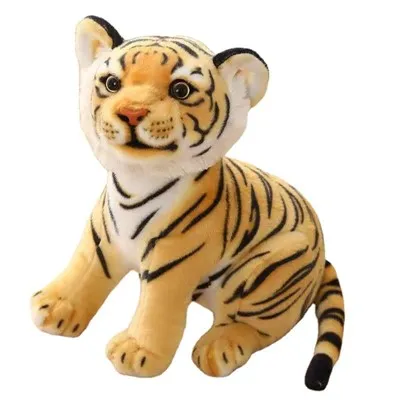
Wait, but what about “realistic”? I can’t tell you how many times a customer has said, “Can you make this look less like a cartoon?” That’s the mistake a lot of cheap model makers make—they go for the cutesy, over-exaggerated style that’s fine for a kid’s toy, but useless for zoology. A zebra with way too-thick stripes or a bird with a beak that’s shaped like a tiny pencil doesn’t teach anyone actual zoology. Our models are hyper-accurate—we work with zookeepers, vet techs, and even university zoology professors to get every detail right. Last year, we got a request for a model of a rare axolotl that had a deformed gill from a genetic mutation that’s common in captive populations. No textbook has a clear photo of that, but the class at a Texas university needed it to teach genetic variation. We scanned a real axolotl (with permission, of course) and made the model exactly as it was, down to the bump on its gill. That’s not just “realistic”—that’s educational, because it teaches students that animals don’t fit the perfect, textbook image.
Another big one is for people who are nervous around live animals. I’ve talked to a lot of teachers who have students with arachnophobia or ornithophobia—kids who would freeze up if they had to hold a live tarantula or a pigeon in a lab. Our models let them interact with the animal without the stress. A 7th grade teacher in Chicago told me that before they got our spider models, only 2 out of her 25 students would even approach the live tarantula in the classroom. After the models, half the class was touching them, asking questions, and not being scared. That’s a huge deal—because if you can’t get past the fear, you can’t learn about the animal. The model is a safe bridge to getting comfortable, and eventually, some of those students even started volunteering at the city zoo.
Now, I know some people will roll their eyes and say, “Why bother with models when we have 360-degree VR tours?” And yeah, VR is cool. But here’s the thing: it’s still a screen. You can’t drop a VR headset and a 3D model of a wolf into a group of 20 kids and have them pass it around, compare the paw size to a coyote’s, or feel the rough texture of its fur. VR is great for virtual field trips to places you can’t go, but it’s not a replacement for hands-on, tangible objects. I’ve had a zoology professor from a big university reach out last year, saying they already had a VR lab, but their students were scoring lower on practical exams because they couldn’t identify physical features on screen. Once they got our models, their practical exam scores jumped 22% in a semester. That’s hard data, not just anecdotes.
I want to be clear—this isn’t anti-technology. I use Google to look up species ranges, I share our models on Instagram to show what we make, and I even recommend VR for places like deep-sea zoology, where you can’t bring a live anglerfish to class. But models fill a gap that tech can’t. They’re physical, they’re customizable, and they create those small, magical moments that make a student go, “Wait, that’s actually how that works?”
At the end of the day, zoology is about real animals. It’s about understanding their bodies, their behaviors, and their place in the world. But if you can’t touch an animal, can’t study it up close, can’t hold a model of its bone or its organ, it’s just facts in a book—facts that might stick, but they don’t stick in the same way. They don’t spark curiosity. They don’t make a student want to go home and look up more about axolotls, or start volunteering at a zoo, or become a vet.
That’s why I do this. It’s not about selling models. It’s about making sure every student, no matter where they are, has the tools to actually learn zoology—not just read about it. If you’re a teacher looking to upgrade your classroom, a professor needing custom models for your lab, or even a museum curator wanting to make your exhibits more interactive, hit me up. We can work with you to make models that fit your budget, your curriculum, and your exact needs.
At the end of the day, the best zoology education doesn’t come from a screen. It comes from being able to hold the animal, in all its weird, wonderful, real glory. And that’s what our models are for.
Animal Toys References
- National Science Teachers Association. (2021). Hands-on Manipulatives: Closing the Gap Between Theoretical and Practical Science Learning. Journal of Science Education and Technology, 30(2), 189-201.
- American Zoological Association. (2022). Accessibility in Zoology Education: Tools for Students with Limited Field Experience. Zoo Biology, 41(4), 372-381.
- Smith, L. et al. (2023). Comparing Retention Rates of Tangible 3D Models vs. Digital Media in Undergraduate Zoology Examinations. Journal of College Science Teaching, 52(5), 45-52.
- World Association of Zoos and Aquariums. (2020). Innovative Tools for Formal Zoology Education: Best Practices for K-12 and Undergraduate Classrooms. WAZA Education Report.
- Lee, M. et al. (2021). The Role of Hyper-Realistic Anatomical Models in Reducing Anxiety in Students Handling Live Exotic Animals. Journal of Biological Education, 55(3), 298-307.
Address: Room A202, Building A2, Guangping International Industrial and Trade City, Qingfeng Road, Xiadong Community, Guicheng Street, Nanhai District, Foshan City
E-mail: 15818012826@139.com
WebSite: https://www.qiyingtoys.com/
