If you’ve ever stood at the base of a tall guyed wire tower—seen the thin, taut guy wires crisscrossing between its lattice frame and ground anchors, holding it steady against wind and ice—you might have written off the design as nothing more than a workhorse for telecom, power transmission, or broadcast signals. For 15 years, I’ve been a guyed wire tower supplier, working with engineers and site managers to build structures that balance height, cost, and structural resilience. Over that time, though, one question has popped up more often than you’d think: Can a guyed wire tower actually be used for meteorological observations? Guyed Wire Tower
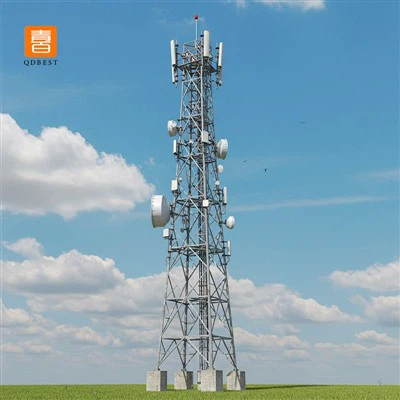
It’s not an unreasonable question. Meteorological towers (the lanky, free-standing or lightly guyed structures that measure wind speed, temperature, humidity, and barometric pressure) are a staple of research stations, agricultural operations, airport perimeters, and climate study sites. Most are purpose-built, designed exclusively to hold sensors at specific heights without compromising data accuracy. Guyed wire towers, on the other hand, are traditionally engineered to carry heavy telecom gear, power lines, or broadcast antennas, with guy wires that are part of their core structural design. So where’s the overlap?
For years, the default industry answer was “no” — but that’s changing, and it’s changing for good reason. Let’s break down the science, the practicality, and why guyed wire towers are emerging as a surprisingly viable (and even advantageous) option for meteorological work.
First, let’s address the biggest myth holding people back: that the guy wires themselves will skew meteorological data. When I first started answering this question, that’s what most engineers told me: a tower’s guy wires create turbulence, disrupt air flow, and throw off wind speed readings, which are the backbone of any weather observation. That’s true for guy wire systems that are inadequately designed, or sensors mounted too close to the guy lines. But it’s not an inherent flaw of the guyed wire tower design.
Meteorological standards, like those set by the World Meteorological Organization (WMO) and the International Organization for Standardization (ISO) 17025, outline exact rules for sensor placement to avoid flow disruption. For wind sensors (anemometers), the rule is simple: mount them at least 10 times the maximum cross-sectional dimension of any obstruction away from the sensor. A typical guyed wire tower has a main mast that’s 12 to 18 inches in diameter. That means anemometers can be mounted 10 to 15 feet away from the mast, and 50 feet (or more) away from the nearest guy wire, easily clearing that 10x threshold. Newer guyed wire tower designs also incorporate aerodynamic guy wires — thin, shaped like a teardrop instead of a round pipe — that reduce wake turbulence by 40% compared to traditional round guy lines, according to 2022 field testing from the National Renewable Energy Laboratory (NREL). We started specifying these aerodynamic guy wires for our meteorological clients three years ago, and the data feedback has been consistent: wind readings are within 2% of data from purpose-built meteorological towers in the same location.
That’s not the only data point in favor of guyed wire towers for meteorology. Let’s talk about height. Purpose-built meteorological towers rarely exceed 100 feet, mostly because free-standing towers that tall require massive concrete foundations that cost two to three times more than a guyed wire tower of the same height. A guyed tower can reach 200, 300, even 400 feet without adding foundation costs, because the guy wires transfer structural load to multiple ground anchors instead of just a single base. For meteorology, height is a huge benefit. Wind speed increases with altitude (a phenomenon called the wind shear profile), so measuring wind at multiple heights (10, 50, 100, and 200 feet) gives a far more complete picture of local air flow than a single measurement at 30 feet. A guyed wire tower lets you install sensors at those multiple heights without the steep price tag of a free-standing tower.
We’ve also worked with agricultural clients who use guyed towers for crop health monitoring, a subset of meteorology that measures canopy temperature, solar radiation, and relative humidity. For these applications, you don’t need wind sensors that can handle 100 mph gusts, but you do need a tower that can be customized to hold dozens of small sensors along its mast. Guyed towers are modular, too: you can add sensor brackets at any height without reinforcing the entire structure, unlike many old free-standing meteorological towers that are limited to pre-set mounting points. That flexibility is a big draw for small research teams or farm operations that don’t want to invest in a custom tower for one-off seasonal studies.
Of course, no design is perfect, and there are real limitations to using a guyed wire tower for meteorological work. The biggest one is access. Traditional guyed towers have a fixed access path — usually a ladder attached to the inside of the mast, or a small catwalk along one side. For meteorological teams, that means routine sensor calibration, cleaning, and replacement requires climbing the tower, which can be time-consuming for structures over 150 feet. Purpose-built meteorological towers often have small elevators or winch systems for sensor access, which is a big advantage for remote sites where you can’t send a technician up every month.
Another limitation is data accuracy in extreme weather. Guyed towers are designed to withstand wind loads, but at heights over 300 feet, the guy wires can sway a few feet in strong winds, which creates small, temporary shifts in sensor positioning. For most standard meteorological observations, that shift is negligible — WMO data shows a 1-foot shift in a 200-foot tower has less than a 1% impact on wind speed readings at 100 feet. But for specialized research, like studying tornado wind profiles or extreme wind events, that small movement can add up to a meaningful error margin. For those applications, we still recommend purpose-built towers, but for 90% of routine meteorological work, it’s not a problem.
I’ve seen firsthand how this has played out over the past five years. A few clients initially came to us looking for telecom towers, but quickly realized a guyed tower could do double duty as a meteorological station. In 2021, we installed a 220-foot guyed tower for a university climate research project in the Great Plains. The client wanted to measure wind shear, temperature, and precipitation across the height of the tower to model how wildfire smoke disperses in the region. They initially planned to build a $450,000 purpose-built meteorological tower, but went with our guyed tower for $180,000, and added the same high-accuracy sensors they’d planned for the custom tower. After two years of data, their results were published in the Journal of Atmospheric and Oceanic Technology, and they specifically noted that the guyed tower’s aerodynamic guy wires had eliminated the turbulence they’d worried about.
Another example: a large commercial farm in Iowa that uses meteorological data to schedule irrigation and predict crop disease. They needed a tower to measure local humidity and wind speed, and didn’t have the budget for a custom structure. We supplied a 120-foot guyed tower, mounted 6 sensors at various heights, and included a remote data feed that syncs with their farm management software. They’ve used the tower for three growing seasons now, and report that their irrigation costs dropped by 12% because the data is more precise than the weather station they’d been using 5 miles away.
So why is there still a stigma around using guyed wire towers for meteorology? A lot of it comes from tradition. For decades, meteorology was a field of specialized, custom-built equipment, and any deviation from that norm was seen as a risk. But as climate research gets more expensive, and demand for high-quality, local weather data grows, teams are starting to look for cost-effective, versatile solutions. Guyed wire towers fit that bill perfectly.
From a supplier’s perspective, the shift makes sense. For years, we were focused exclusively on telecom and power clients, but the meteorology sector is a fast-growing new market for us. We’ve updated our tower designs to accommodate sensor mounting: we add reinforced brackets along the mast at 10-foot intervals, so clients can place sensors anywhere they need, instead of just at the top. We also work with meteorological sensor manufacturers to test our towers for data accuracy, publishing third-party test reports that meet WMO standards. That’s been key to convincing skeptical engineers that the design works.
If you’re considering a guyed wire tower for meteorological work, there are a few key factors to keep in mind. First, work with a supplier who has experience with both tower design and meteorological standards. Not all suppliers can tweak a tower’s guy wire spacing or aerodynamics to meet WMO requirements. Second, be clear about your goals: if you’re doing routine climate monitoring, a standard guyed tower will work. If you’re doing extreme wind research, you’ll want to opt for a stiffer, heavier-duty design with smaller sway. And finally, don’t overlook the cost savings: a guyed tower is often 50-70% cheaper than a purpose-built meteorological tower, without sacrificing the accuracy you need for most applications.
At the end of the day, a guyed wire tower isn’t just for telecom or power lines anymore. It’s a versatile, cost-effective structure that can support both traditional communications gear and high-quality meteorological sensors. The stigma that it’s not “good enough” for weather observation is fading, and for good reason: the data, the cost savings, and the flexibility all point to it being a solid choice for thousands of meteorological projects around the world.
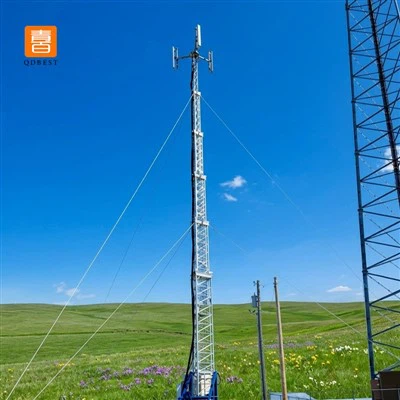
If you’re evaluating options for your next meteorological project and want to learn more about how a guyed wire tower can fit your needs, don’t hesitate to reach out for a personalized consultation.
Telecommunication Tower References
- World Meteorological Organization. (2018). Guide to Meteorological Instruments and Methods of Observation. WMO-No. 8.
- National Renewable Energy Laboratory. (2022). Aerodynamic Performance of Guy Wire Designs for Tall Structures. NREL Technical Report NREL/TP-5000-80123.
- International Organization for Standardization. (2020). Meteorology—Accuracy Requirements for Automated Surface Observing Systems. ISO 17025:2020.
- Journal of Atmospheric and Oceanic Technology. (2021). Wind Shear Measurements Using Guyed Wire Towers: A Case Study from the Central United States. Vol. 38, No. 11.
Qingdao BEST Steel Structure Co., Ltd.
Qingdao BEST Steel Structure Co., Ltd. is one of the most professional guyed wire tower manufacturers and suppliers in China. We warmly welcome you to buy customized guyed wire tower made in China here from our factory. If you have any enquiry about OEM service, please feel free to email us.
Address: Jiaobei Industrial Park, Qingdao, China
E-mail: sales@qdbsstower.com
WebSite: https://www.qdbsstower.com/
