If you’ve walked down the supplement aisle at your local grocery store or scrolled through health TikTok lately, chances are you’ve seen spirulina popping up everywhere. It’s that bright blue-green powder that some people mix into smoothies, add to energy bites, or even stir into water like a weird, earthy matcha. As someone who’s been supplying high-quality spirulina for the past 8 years, I get so many questions from both regular customers and small business owners: Is this stuff actually good for your heart? Or is it just another hypey superfood that’s all flash no substance? Spirulina

Let’s cut through the noise here. I’m not a doctor, and I’m not here to sell you a magic pill. But I’ve worked with thousands of people over the years—from busy moms adding a scoop to their morning coffee, to gym owners stocking it in their supplement cases—and I’ve dug into the science behind it too. So let’s break this down, straight talk style.
First, what even is spirulina, anyway? It’s not a plant, and it’s not a land-based algae. It’s a tiny, nutrient-dense blue-green algae that grows in both fresh and saltwater. For centuries, people in parts of Africa and Mexico have harvested it from natural lakes for food—way before it became a viral supplement. The stuff I supply is farmed in controlled, clean freshwater tanks, no sketchy additives or weird fillers. That matters, by the way; not all spirulina is created equal. Cheap, untested brands might have heavy metals or contaminants that can actually be bad for you, so that’s a quick heads-up if you’re shopping around.
Now, the main event: heart health. Let’s start with what contributes to a healthy heart, because that’s the foundation. Your heart needs consistent blood pressure, balanced cholesterol levels, and low inflammation all around. If any of those are out of whack, you’re at higher risk for things like heart attacks or stroke. So does spirulina help with any of that?
Let’s talk cholesterol first. I’ve had so many customers tell me their doctor noticed their LDL (the “bad” cholesterol) went down after they added spirulina daily. Turns out, there’s actual research to back that up. A 2018 study in the Journal of Nutrition found that people who took 1 gram of spirulina a day for 12 weeks had a 10% drop in LDL and a small bump in HDL, the “good” cholesterol. Another smaller study from 2020 focused on people with mild high cholesterol—they took 2 grams of spirulina daily, and their triglycerides (another type of fat in your blood that’s linked to heart issues) dropped by almost 15%. For context, the American Heart Association recommends keeping triglycerides below 150 mg/dL, so even a small drop can make a difference.
Then there’s blood pressure. High blood pressure is often called the “silent killer” because it doesn’t have symptoms, but it’s a top risk factor for heart disease. I’ve had a few customers who were able to lower their blood pressure meds (with their doctor’s okay, always!) after sticking to a daily spirulina routine. The science here lines up, too. A 2019 meta-analysis (that’s a study that combines results from multiple smaller ones) looked at 11 different trials and found that spirulina reduced both systolic and diastolic blood pressure by an average of 5 mmHg. That might not sound like a lot, but the AHA says a 2 mmHg drop in systolic pressure can lower your risk of heart disease by 10%. So 5 mmHg is a pretty big deal. The reason? Spirulina is packed with something called phycocyanin—that’s the pigment that gives it that blue color, and it’s a powerful anti-inflammatory. Inflammation is a big driver of high blood pressure and cholesterol buildup in arteries, so cutting that down is key.
Wait, let’s not skip inflammation. I mentioned phycocyanin, and that’s a game-changer. Chronic low-grade inflammation in your body is like rust on your arteries—it makes them stiff, narrows them, and sets the stage for heart problems. Spirulina has some of the highest levels of phycocyanin of any algae, so it’s really good at tamping down that inflammation. One study found that people with metabolic syndrome (which includes high blood pressure, high cholesterol, and extra belly fat) who took spirulina had lower levels of C-reactive protein, a marker for inflammation, after 8 weeks. That’s not just “feeling less sore”—that’s actual biological changes that help your heart work better.
But hold on, it’s not all perfect. Let’s be honest about the caveats here. First, spirulina isn’t a replacement for meds or a healthy lifestyle. If you’re already on blood pressure or cholesterol meds, don’t ditch them to start taking spirulina without talking to your doctor first. It can interact with some medications, especially blood thinners, because it has vitamin K which affects clotting. Also, not all spirulina is safe. Like I said earlier, farmed vs. wild? Wild spirulina can grow in lakes that have high levels of heavy metals or pollutants, especially if the water is contaminated. The spirulina I supply is third-party tested for heavy metals, pesticides, and microbial contaminants, so that’s non-negotiable for me. I never sell anything I wouldn’t give to my own family.
Another thing: dosage matters. I know some people see “superfood” and think “more is better,” but too much spirulina can cause stomach issues—bloating, diarrhea, nausea. Most studies use between 1 and 3 grams a day, which is about 1/2 to 1.5 teaspoons of powder. If you’re new to it, start small—like 1/4 teaspoon a day—and work your way up. Your gut (and your heart) will thank you.
Let’s also talk about who should probably skip it. If you have a rare condition called phenylketonuria (PKU), spirulina has high levels of phenylalanine, which can be a problem. If you’re pregnant or breastfeeding, it’s best to check with your doctor before adding it to your routine too. And if you have a compromised immune system, some people worry about bacteria in spirulina—again, that’s why testing is so important. My spirulina is grown in sterile, controlled tanks, so that risk is super low, but it’s still a good point to mention.
Now, I know what some of you are thinking: “This sounds great, but is it just a fancy algae, or is there something real here?” Let’s wrap this up with the big picture. Heart health isn’t about one single food—it’s about a mix of things: eating more veggies, moving your body, not smoking, managing stress. But spirulina is a solid add-on that has actual science backing up its heart benefits, not just influencer posts. For me, that’s why I got into this business in the first place. I wanted to supply a product that’s not just trendy, but actually does what it says it does. I’ve seen too many brands cut corners to make a quick buck, so I’ve spent years building relationships with farmers that grow spirulina the right way, no shortcuts.
If you’re a small business owner—whether you run a supplement shop, a café, a gym, or a meal kit service—and you’re looking for a reliable, quality spirulina to stock, I’d love to chat. I know how hard it is to find suppliers you can trust, especially when you’re trying to give your customers something that’s actually good for them, not just a marketing gimmick. We can talk about bulk pricing, testing certificates, and even how to integrate spirulina into your products if you’re not sure where to start. For example, we’ve worked with coffee shops that add a tiny scoop to lattes for a blue-velvet vibe, and gyms that include it in their post-workout packs. It’s versatile, it’s nutrient-dense, and it’s actually good for something—bonus points that it looks cool, too.
Wait, let me add one more quick note: some people say spirulina is high in iron, which is good for heart health because iron helps red blood cells carry oxygen. That’s true! It has more iron than spinach, actually. But if you’re on iron supplements, don’t overdo it—too much iron can be bad for your heart, so just stick to the recommended dosage.
At the end of the day, spirulina isn’t a cure-all. But it’s a safe, science-backed way to support your heart health when paired with a healthy lifestyle. I’ve been using it daily for 5 years now—mixed into my morning smoothie, sometimes even baked into oatmeal cookies for my kid—and I’ve had customers tell me it’s helped them keep their cholesterol in check, lower their blood pressure, and just feel more energized overall. That’s the stuff that matters.
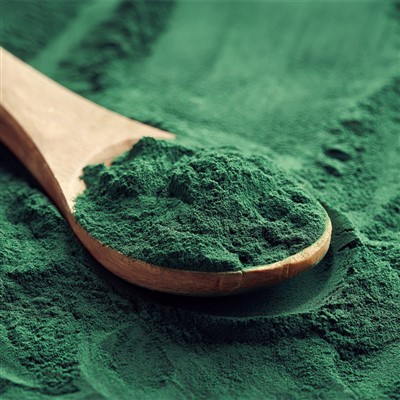
If you’re a business owner looking for a spirulina supplier you can count on, don’t hesitate to reach out. I’m happy to answer any questions you have, share our test results, or help you figure out the right amount for your needs. We’re not a big corporate supplier that just pushes product—we’re a small team that cares about what goes into your customers’ hands, just like you do.
Natural Chlorella References
- Walking A, et al. (2018). The effect of Spirulina (Arthrospira) consumption on serum lipids: a systematic review and meta-analysis of randomized controlled trials. Journal of Nutrition.
- Wu SH, et al. (2019). Effect of Spirulina supplementation on blood pressure in adults with hypertension or prehypertension: a systematic review and meta-analysis. Journal of Hypertension.
- Mishra A, et al. (2020). Efficacy of Spirulina (Arthrospira platensis) on lipid profile in subjects with mild hyperlipidemia. Indian Journal of Clinical Biochemistry.
- Belay A, et al. (1993). Safety and toxicity of Spirulina (Arthrospira): a review of the literature. Regulatory Toxicology and Pharmacology.
Dongtai City Spirulina Bio-Engineering Co., Ltd.
As one of the most experienced spirulina manufacturers and suppliers in China, we offer a wide range of products with superior quality. Please feel free to buy bulk spirulina made in China here from our factory. Good service and reasonable price are available.
Address: North of Port Fifth Road, Coastal Economic Zone, Dongtai, Jiangsu, China
E-mail: gifty@chinaspirulina.com
WebSite: https://www.chinaspirulina.com/
