If you’ve ever worked with Dutch weave mesh—whether you’re a filtration engineer, a fabrication shop owner, or someone just dipping their toes into industrial materials—you’ve probably wondered about cutting it without messing up the fine, interwoven structure that makes it so useful. As a supplier who’s fielded this question at least a dozen times a week for the last eight years, let’s cut to the chase: yes, Dutch weave mesh can absolutely be laser cut. But it’s not as simple as hitting “cut” on a laser cutter and walking away. There’s a lot more to it than just firing up the machine, and I’ve got the war stories (and the scars from bad cuts) to prove it. Dutch Weave Mesh

First, let’s quick refresh what Dutch weave is, because not everyone who hits up our shop knows the difference between that and plain weave. Dutch weave is that tight, two-layered mesh you see used for things like filter elements, pharmaceutical sieves, or even specialized screen printing. Unlike plain weave (where every thread goes over one, under one), Dutch weave uses two distinct thread sizes: a thick, robust warp thread that forms the base, and a much finer, tightly packed weft thread that wraps around it. That’s why it’s way more precise than plain weave—you can get micron-level filtration, no gaps for debris to slip through. But that same tight, interlocked structure is also why cutting it wrong can turn a $50 roll of mesh into nothing more than scrap metal.
So why would anyone want to laser cut Dutch weave, anyway? Good question. Most of our customers used to swear by mechanical cutting—like shears or punch presses—because it felt straightforward. But over the last 10 years, laser cutting has blown up for custom parts. It’s faster, works for weird shapes (think circular filter discs with notches for gaskets, or custom-sized mesh panels that don’t require trimming down a big roll), and gives way cleaner edges than shearing, which can pull or bend those fine weft threads, ruining the filtration accuracy. But here’s the catch: Dutch weave is typically made from metals like stainless steel (304, 316 is the most common), sometimes brass or even Hastelloy for high-temperature jobs, and those metals have different properties that change how they react to a laser.
Let’s get into the nitty-gritty of how the laser interacts with the mesh. When you run a laser over solid metal, it melts or vaporizes the material, and a gas jet blows the molten debris away. With Dutch weave, though, you’ve got two layers of threads spaced at tiny intervals—so the laser doesn’t just have to cut through solid metal; it has to penetrate gaps and not distort the surrounding threads. Early on, we had a customer who tried to laser cut 200-micron Dutch weave stainless steel on a standard 1000W laser cutter. The result? Half the weft threads melted together, the edges were jagged, and when he tested the filter, it had leaks where threads had fused. We learned really fast that not all lasers are created equal for this job. The sweet spot? A fiber laser, usually between 1500W and 3000W. Fiber lasers have a tighter, more focused beam than older CO2 lasers, so they can target individual threads without overheating the surrounding area. We also found that nitrogen as an assist gas works way better than compressed air or oxygen—air can cause oxidation on the cut edges, which is a no-go for pharmaceutical or food-grade applications, and oxygen can etch the fine weft threads, weakening them.
Another big thing we’ve picked up over the years: thread tension. Dutch weave mesh is shipped on rolls, so when you unroll it for cutting, it’s got a bit of slack. If you run a laser over mesh that’s not held tight, the threads can shift when the laser hits them, leading to uneven cuts or melted spots. We now tell every customer who wants to laser cut their mesh to invest in a mesh hold-down table with vacuum or magnetic clamps—nothing fancy, just something to keep the mesh flat and taut during the cut. One time, a customer skipped that step and ended up with a batch of 500 filter discs where half had off-center holes because the mesh shifted mid-cut. He came back to us to re-cut them, and we made him use our hold-down setup as part of the service—lesson learned.
Now, what about different mesh types? Not all Dutch weave is the same, so cutting parameters change depending on the weave density and thread size. For example, a coarse 50-micron Dutch weave (used for industrial water filtration) is way easier to cut than a fine 10-micron weave (used for lab filters). We adjust the laser speed: for coarse mesh, we go a bit faster, like 500 mm/s, because the larger threads don’t overheat as easily. For fine mesh, we slow down to 200-300 mm/s, use a smaller beam diameter, and sometimes even run two quick passes instead of one. That avoids melting the tiny weft threads, which is critical—cut a 10-micron thread too hot, and it’s gone, turning a precision filter into a piece of junk.
We also have a few go-to tips we’ve shared with hundreds of customers, stuff we figured out the hard way. First, test cuts are non-negotiable. Even if you’ve cut the exact same mesh 100 times before, make a test piece first. Laser alignment can be off, or a new batch of mesh might have a tiny thread variance that throws off the cut. Second, avoid tight corners if you can—lasers slow down in corners, which leads to overheating. If you need a custom shape with angles, radius the corners to at least 1mm to keep the cut clean. Third, post-cut cleaning is important. Laser cutting leaves a tiny bit of slag on the edges, especially on thicker mesh, so a quick rinse with compressed air or a gentle acid bath (for stainless steel) removes that without damaging the threads.
Wait, but is there a time when laser cutting is a bad idea? Yeah, totally. If you’re working with extremely thick Dutch weave—like over 2mm warp thread—laser cutting might not be cost-effective, because you’ll need multiple passes and it’ll take forever. In that case, water jet cutting or precision shearing works better. Also, if you need mesh with absolutely zero thermal impact, like for heat-sensitive pharmaceutical products, mechanical cutting might be safer, though modern fiber lasers with nitrogen assist barely leave any heat-affected zone, so it’s getting harder to argue that.
As a supplier, we’ve started offering laser cutting as a standard service now, because so many customers ask for it, and we’ve refined the process to get consistent, high-quality cuts. We’ve cut everything from small 1-inch filter discs for lab equipment to 4-foot panels for industrial screening, and the feedback’s been way better than when we only offered mechanical cutting. The biggest win? No more bent or pulled threads, which was a constant complaint with shear-cut parts. One customer even told us their yield went from 70% with shearing to 98% with laser cutting, because we barely have any scrap.
If you’re thinking about laser cutting Dutch weave mesh, don’t just go to any fabricator. Ask them if they have experience with mesh specifically, not just flat metal sheets. Ask about their laser type (fiber is non-negotiable), what assist gas they use, and if they do test cuts. At the end of the day, the mesh’s fine structure is what makes it valuable—you don’t want a cut that ruins that.
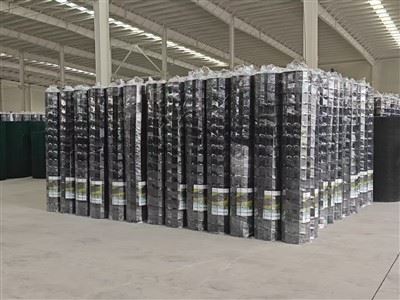
Whether you’re a small business owner needing a single custom filter or a large manufacturer with bulk orders, laser cutting Dutch weave is absolutely doable when you do it right. We’ve been doing it for years, worked out all the kinks, and now we can help you get clean, precise cuts that keep your mesh performing as it should. If you’ve got a project in mind—whether it’s a custom shape, a specific weave density, or something you’re not even sure is possible—hit us up to talk through the details. We’ll walk you through the process, answer all your questions, and make sure you end up with parts that work the way you need them to.
Dutch Weave Mesh References:
- "Laser Cutting of Metal Meshes: Process Parameters and Edge Quality" – International Journal of Machine Tools and Manufacture, 2018.
- "Industrial Filtration Media: Materials and Applications" – CRC Press, 2020.
- "Fiber Laser Cutting of Thin Stainless Steel Sheets" – Journal of Laser Applications, 2016.
- "Mesh Cutting Technologies: A Comparative Analysis" – Fabricator Magazine, 2021.
Hengshui Anbang Road and Bridge Material Co., Ltd.
As one of the most professional dutch weave meshmanufacturers and suppliers in China, we’re featured by quality products and good service. Please rest assured to wholesale bulk customized dutch weave mesh from our factory. For pricelist, contact us now.
Address: Zhaobazhuang Wire Mesh Industrial Park, Shenzhou City, Hengshui City, Hebei Province
E-mail: 13482929933@163.com
WebSite: https://www.cnanbang.com/
