If you’ve ever worked with polyurethane foams, coatings, adhesives, or elastomers, you know that the polyester polyol you choose—like our EG Series—doesn’t just perform in your end product: it also needs to survive the journey from our plant to your facility. Packaging for polyester polyols isn’t one-size-fits-all, and over the 12 years I’ve spent as a technical sales lead for our company, I’ve seen firsthand how a poorly chosen packaging option can turn an otherwise high-quality polyol into a headache: delayed deliveries, product degradation, even safety risks. Today, I want to break down the packaging options for our Polyester Polyol EG Series, what works for which use cases, and why getting this right matters for your operation. Polyester Polyol EG Series
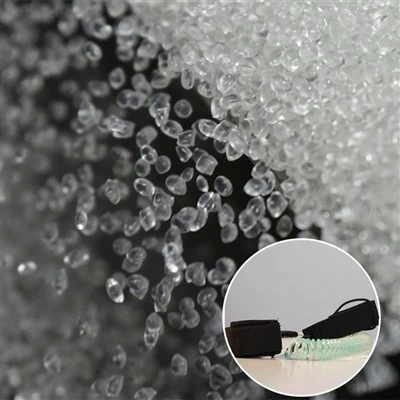
First, let’s ground this in what makes our EG Series unique, because that’s a non-negotiable starting point for choosing packaging. Our EG Series polyols are linear, hydroxyl-terminated polyesters made exclusively with ethylene glycol (EG) as the core diol feedstock, giving them a consistent hydroxyl number, low moisture content, and excellent thermal stability. They’re widely used in rigid insulation foams for construction, flexible foams for upholstery, and even water-based coatings that need chemical resistance. But like all polyester polyols, they’re hygroscopic—meaning they absorb moisture from the air quickly. Even a 0.1% moisture spike can throw off isocyanate reactions in polyurethane production, leading to foams with voids or coatings with blisters. That’s why packaging for the EG Series isn’t just about containment; it’s about moisture protection, chemical compatibility, and safe, easy handling for your team.
The first packaging option most of our customers start with is 20-liter (5-gallon) steel drums. This is the workhorse for small-batch orders, lab research, or custom formulations where you don’t need hundreds of kilograms of polyol at once. Here’s what I’ve learned from years of recommending these drums: they’re lined with a food-grade epoxy resin that prevents the polyester polyol from reacting with the steel. Without that lining, the polyol would degrade over time, turning cloudy and losing its reactive hydroxyl groups. For customers who test new EG Series grades for their upholstery foam lines, or who run small custom coating batches, these drums are perfect. But there’s a catch: even with the lining, you have to store these drums in a cool, dry warehouse. The steel lid has a rubber gasket, but if a drum sits in a humid loading dock for three days, moisture can seep in. Last year, a customer in Ohio ordered 10 drums of EG 2000 for a pilot flexible foam project, and they left them on their loading dock overnight during a rainstorm. When they opened the lids, the polyol’s moisture content had jumped from 0.05% to 0.32%—enough to ruin their entire test batch. I always warn first-time customers about that: even the best lining doesn’t fix a bad storage environment. Also, steel drums are returnable, which cuts down on waste, but you have to make sure they’re cleaned properly before shipping them back to our plant; leftover polyol residue can cause cross-contamination with other grades.
Next up are intermediate bulk containers, or IBCs, which hold 1,000 liters (about 264 gallons) of EG Series polyol. These are the go-to for medium to large production runs, especially for our rigid insulation foam customers who need steady, high-volume shipments. IBCs are a game-changer because they combine the safety of a rigid container with the ease of pumping polyol directly into your processing tanks—no more manually dumping 55-gallon drums, which cuts down on labor and spill risks. Our EG Series is compatible with two types of IBC liners: high-density polyethylene (HDPE) and woven polypropylene (PP) with a food-grade barrier coating. The HDPE liner is more flexible, so it collapses as the polyol is pumped out, reducing the headspace that can trap humid air— that’s a big win for moisture protection. I’ve recommended these IBCs to a large insulation manufacturer in Texas for three years now, and their moisture content has stayed consistent at around 0.05% because we add a nitrogen blanketing valve to the IBC spout before sealing. That valve replaces the air in the headspace with dry nitrogen, so even if the IBC is stored outside for a few days before unloading, moisture can’t get in. The woven PP liner is a little more budget-friendly, but I only recommend it for customers with very tight inventory schedules; it’s not as flexible as HDPE, so the headspace left after pumping is bigger, which means you have to unload the IBC within 48 hours to avoid moisture buildup. One thing to note: IBCs are not returnable for most customers, but they’re recyclable through industrial plastic reclamation programs, so they’re more sustainable than single-use steel drums.
For the largest volume orders—think 10,000 liters or more per shipment—we use road tankers, specifically insulated stainless steel tank trucks. Our EG Series polyols have a melting point that ranges from 40°C to 55°C, depending on the grade: for example, EG 1000 melts at around 40°C, while EG 3000 is closer to 55°C. If you ship it in a cold tanker, the polyol will solidify in the lines, making it impossible to unload without heating it, which can cause degradation. That’s why all our road tankers are insulated, with heating coils that maintain the polyol at 5°C above its melting point during transport. We also add a static grounding wire and a pressure relief valve to every tanker to meet OSHA’s standards for handling flammable liquids (polyester polyols have a flash point around 250°C, which is relatively high, but still requires proper safety containment). A customer in Michigan who produces rigid foam boards relies on these tankers every two weeks, and their team saves about 2 hours per shipment because they can connect the tanker’s pump directly to their production line, no intermediate transfers needed. The only downside here is that road tankers require a loading dock with a pressure-rated connection, so they’re not ideal for small or remote facilities.
Wait, there’s another packaging option I don’t talk about enough: flexitanks for bulk ocean or rail shipping. A lot of our international customers, especially in Southeast Asia and South America, use flexitanks when they order 20,000 liters of EG Series polyol for their local foam or coating plants. Flexitanks are single-use, heavy-duty plastic bladders that fit inside a standard 20-foot shipping container, so they’re cheaper than renting a full tanker for ocean transport. But here’s the key: we only use flexitanks with a 6-layer co-extruded barrier film that has an EVOH (ethylene vinyl alcohol) core, which is 10 times more moisture-resistant than standard HDPE. A few years ago, a customer in Vietnam tried a standard flexitank with our EG 2000 polyol, and when the shipment arrived, the moisture content was 0.18%—high enough to cause blisters in their water-based coatings. We switched them to the EVOH flexitank, and now their shipments come in at 0.06% moisture, which is exactly what we guarantee. The downside of flexitanks is that they’re single-use, so you can’t return them, and you have to unload the entire volume at once—no partial shipments. That works for most of our international customers, who order large, consistent volumes every month, but it’s not a fit for domestic customers who might only need half a tanker’s worth at a time.
Now, I want to break down which packaging works for which EG Series grade, because it’s not one size fits all. For our lower-molecular-weight EG Series polyols—EG 600, EG 1000, which have lower melting points (around 40°C) and higher reactivity—we typically recommend steel drums for small orders and IBCs for medium orders. These lower grades are more sensitive to moisture during transport, so the steel drum’s epoxy lining and IBC’s nitrogen blanketing provide the extra protection they need. For our higher-molecular-weight grades, like EG 3000 and EG 5000, which have higher melting points and lower reactivity, flexitanks and road tankers work really well. They’re less hygroscopic, so even a small amount of headspace in a flexitank won’t cause a moisture issue during a 6-week ocean shipment. I learned this lesson the hard way five years ago, when a customer tried to ship EG 5000 in a standard steel drum. When it arrived, the polyol had solidified into a block, and they had to heat it for 12 hours to use it, which lowered its hydroxyl number by 8 points—enough to make their elastomers too soft. Now we explicitly recommend bulk packaging for higher-molecular-weight grades, because the heat maintenance in IBCs, tankers, and flexitanks prevents solidification and degradation.
Another thing I always emphasize to customers is the importance of packaging labels and documentation. All our EG Series packaging has a clear label with the grade number, hydroxyl number, moisture content guarantee, and handling instructions. I’ve seen customers make the mistake of mixing up EG 2000 and EG 3000 because their labels were faded, leading to off-spec products. For bulk orders (IBCs, tankers, flexitanks), we include a digital COA (certificate of analysis) with every shipment, linked to a unique batch number, so you can verify the polyol’s specs before you even unload it. That’s a big plus for quality control teams, who don’t have to test every batch themselves—they can cross-check the COA with their own specs.
I also want to touch on sustainability, because more and more customers are asking about that now. Our steel drums are 90% recyclable, and we offer a free drum pickup program for domestic customers, where we clean and recondition the drums for reuse. Our IBCs are also recyclable, and we partner with industrial plastic reclamation companies to turn them into new packaging materials. Flexitanks, while single-use, are made from 100% recyclable plastic, so they don’t end up in landfills—most are processed into other plastic products like pipes or playground equipment. I’ve had customers tell me that choosing our packaging options has helped them meet their own sustainability goals, which is a huge added bonus beyond performance.
At the end of the day, choosing the right packaging for our Polyester Polyol EG Series is about matching your order volume, your storage capacity, your end product’s requirements, and your sustainability goals. If you’re a lab testing a new foam formula, 20-liter steel drums are your best bet. If you’re a large insulation plant running 2,000 liters a week, IBCs with nitrogen blanketing will save you time and reduce waste. If you’re shipping internationally, EVOH flexitanks are the most cost-effective way to get consistent, high-quality polyol to your facility.

I’ve been in this industry long enough to know that small details like packaging can make or break a production run. That’s why I never shy away from talking through your specific needs—whether you’re a first-time customer ordering your first batch of EG Series polyol, or a long-time partner looking to streamline your supply chain. If you’re currently dealing with packaging issues for your polyester polyol shipments, or you’re ready to place an order for the EG Series, feel free to reach out to our team to discuss your requirements. We’ll walk you through every option, help you pick what works best for your operation, and make sure your polyol arrives in perfect condition, ready to perform.
Polyether TPU References:
- Oertel, G. (1993). Polyurethane Handbook: Chemistry, Raw Materials, Processing, Application, Properties. Hanser Gardner Publications.
- ASTM D4673-19, Standard Test Method for Hydroxyl Number of Polyurethane Raw Materials (Polyols). ASTM International.
- OSHA 29 CFR 1910.106, Flammable Liquids: Handling and Storage. Occupational Safety and Health Administration.
- European Polyurethane Association (EuPC). (2021). Sustainable Packaging Guidelines for Polyurethane Raw Materials.
Singbon New Materials(Shandong) Co., Ltd.
With abundant experience, we are one of the most reliable polyester polyol eg manufacturers and suppliers in China. We warmly welcome you to wholesale advanced polyester polyol eg at low price from our factory. If you have any enquiry about quotation and free sample, please feel free to email us.
Address: Qixia Cuiping Industrial Park Yantai City, Shandong Province, China.
E-mail: DBG1@singbonpu.com
WebSite: https://www.tpusingbon.com/
