If you’ve ever stood in front of a conveyor line watching packages move, or adjusted the angle of a solar panel to track the sun, you’ve seen a permanent magnet (PM) DC motor at work—paired with a gearhead, that is. As a supplier of PM DC motors, I talk to dozens of buyers every week who get stuck at one common question: how do I pick the right gearhead for my motor? It’s not a trivial call. Get this wrong, and you’ll end up with a system that stalls mid-operation, wastes energy, or wears out in months instead of years. Get it right, and your motor will run smoothly, efficiently, and reliably for the full lifecycle of your application. Permanent Magnet DC Moto
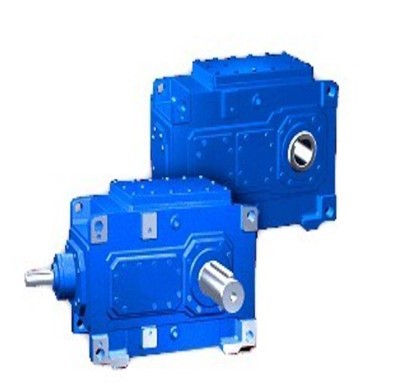
Let’s start with the basics, because a lot of buyers skip this and end up in trouble. A PM DC motor produces a certain amount of torque and speed on its own, but most industrial, automation, or consumer applications need a different combination: slower speed with more torque. That’s where a gearhead comes in. It’s a set of gears that reduces the motor’s speed, multiplies its torque, and matches the motor’s output to what your application actually needs. But not all gearheads are the same, and not all will work well with your specific PM DC motor.
First, you need to align the gearhead’s type to your application’s demands. The three most common gearhead types for PM DC motors are planetary, spur, and worm gearheads, and each has a sweet spot. Let’s break them down, using real examples from the customers I work with. Planetary gearheads are the most popular for precision applications—think robotics, 3D printers, or lab equipment. They use multiple satellite gears around a central sun gear, which distributes load evenly across the gears. That means they handle high torque loads without wearing out quickly, and they’re compact, which is perfect for space-constrained designs. Last quarter, a customer who builds collaborative robot arms came to me with a PM DC motor that needed to run at 50 RPM with 12 Nm of torque; a planetary gearhead was the only type that fit their tight arm joint and could handle the repeated, smooth motion required for safe human-robot interaction.
Spur gearheads are simpler, cheaper, and great for lower-torque, constant-speed applications, like conveyor belts in warehouses or small fans. They use straight-cut gears that mesh in a simple line, so they’re easy to manufacture and less expensive than planetary or worm gearheads. A packaging company I supply uses spur gearheads with their PM DC motors for their label applicators—they only need steady 100 RPM speed and 3 Nm of torque, and the spur gearheads hold up perfectly, no extra cost needed. The catch? They’re noisier than other types, and they’re not good for heavy or reversing loads. If you try to use a spur gearhead for a conveyor that stops and starts a hundred times a day, the gears will wear out fast.
Worm gearheads are the go-to for high-torque, low-speed applications where you need self-locking functionality. That means once the motor stops, the gearhead won’t rotate backward, which is critical for things like lift gates, window operators, or conveyor stops that need to hold position without power. For example, a customer in the material handling industry came to me last year needing a PM DC motor to lift 500 kg pallets; a worm gearhead’s self-locking feature meant the pallet wouldn’t slip down when the power was cut, which was a non-negotiable safety requirement here. The downside of worm gearheads is they’re less efficient (usually 50-70%, compared to 85-95% for planetary), so if you’re running the motor constantly, you’ll use more energy than you would with a planetary.
Now, let’s get to the numbers—because specs matter more than marketing claims. First, you need to match the gearhead’s gear ratio to your desired speed and torque. The gear ratio is the input speed divided by the output speed, right? So if your PM DC motor runs at 2,000 RPM, and you need 50 RPM at the output, your ratio is 2000/50 = 40:1. That’s the number you’ll look for when picking a gearhead, but here’s the twist: you also have to account for load. A lot of buyers just multiply the load torque by the ratio, but that’s a mistake. Your PM DC motor’s output torque at a given speed is fixed, but the gearhead’s rated torque has to be higher than the actual load torque plus a safety factor.
I always recommend a safety factor of 1.5 to 2 times the actual load torque. Why? Because things rarely go exactly as planned. Your conveyor might be carrying a heavier load than the spec, or the motor might start under a higher initial torque (called startup torque) than steady-state torque. If you pick a gearhead that’s only rated for your exact load, it will overheat, wear out, and fail prematurely. Last year, a small automation startup came to me with a PM DC motor they’d paired with a gearhead rated exactly for their 8 Nm load. Within two months, the gears were stripped—they’d forgotten the startup torque, which was 12 Nm, and no safety factor. We worked with them to adjust the gearhead to 18 Nm rated, and that fixed the problem.
Next, there’s the issue of compatibility with your PM DC motor’s mounting. This is a small detail that causes a lot of headaches. Gearheads come in different frame sizes and mounting configurations—flange mount, shaft mount, foot mount— and if it doesn’t line up with your motor, you’ll need custom adapters, which add cost and risk of misalignment. Misalignment is a big one: if the motor and gearhead shafts aren’t perfectly aligned, they’ll create extra vibration, wear on the bearings, and reduce efficiency. I see this all the time with customers who try to mix and match parts from different suppliers without checking mounting specs. As a PM DC motor supplier, I always stock gearheads that are pre-matched to our motors, so you don’t have to worry about that—we build them as a complete unit, so alignment is factory-set, and you don’t have to source adapters separately.
Efficiency is another key factor, especially if your application is battery-powered, since that’s a big selling point for most PM DC motors. Each gearhead type has a different efficiency rate, as I mentioned earlier. Planetary gearheads are the most efficient, which means less energy is lost as heat, so your battery will last longer between charges. Spur gearheads are next, followed by worm gearheads. If your application is a mobile robot that runs on a 24V battery, a 5% difference in efficiency might mean an extra hour of run time— that’s a huge deal for customers. I work with a mobile robot manufacturer that switched from a worm gearhead to a planetary gearhead with their PM DC motors, and they saw a 12% increase in battery life, which made their product way more competitive in the market.
Durability and environment are often overlooked, but they’re make-or-break for certain applications. If your PM DC motor is going to be used outdoors, in a warehouse with dust and moisture, or in a food processing plant where it needs to be washdown-safe, you need a gearhead with the right material and protection rating. For dusty environments, a sealed gearhead with hardened steel gears will resist wear better than an open one. For washdown areas, you need a gearhead made of stainless steel or coated with a corrosion-resistant material, with an IP65 or higher rating to keep water out. I supply a lot of PM DC motors to food and beverage companies, and we use gearheads with FDA-approved materials for those applications—no cheap plastic components that will break down under repeated washing.
Noise is another consideration, especially for office equipment, medical devices, or products that are used in quiet environments. Spur gearheads are generally noisier because of the straight-cut gears meshing, while planetary gearheads have spiral-cut gears that run more quietly. Worm gearheads are also relatively quiet, but not as much as planetary. A customer who makes hospital bed actuators came to me a while back because their old setup was too loud for patients’ rooms. We swapped their spur gearhead for a low-noise planetary gearhead paired with our PM DC motor, and the noise level dropped by 15 dB, which made a big difference.
Let’s walk through a real scenario to tie all this together. Suppose you’re building a small automated conveyor for a retail distribution center. You need the conveyor to run at 80 RPM, carry a maximum load of 20 kg, and run 12 hours a day, 6 days a week. Your PM DC motor runs at 3,000 RPM, with a rated torque of 2 Nm. First, calculate the gear ratio: 3000 / 80 = 37.5:1. Now, calculate the load torque. The load torque for a conveyor is (mass x gravity x coefficient of friction) / gear ratio. For a small conveyor, that’s roughly 20 kg x 9.8 m/s² x 0.3 (friction) / 37.5 = ~1.57 Nm. Add a safety factor of 1.5, so required rated torque is ~2.36 Nm. Now, your application is constant speed, medium-load, not super space-constrained, and not in a harsh environment. That means a spur gearhead makes sense— it’s cheaper, efficient enough for constant run time, and fits the mounting for your PM DC motor. You’d pick a spur gearhead with a 40:1 ratio (close to your 37.5:1) rated for at least 2.5 Nm, matching the frame size of your motor. That’s a setup that will run reliably, efficiently, and cost-effectively for years.
Now, a few common mistakes I see buyers make when pairing gearheads with PM DC motors. First, buying the cheapest gearhead you can find. That almost always backfires—cheap gearheads use soft steel gears that wear out fast, or plastic components that can’t handle load. Second, ignoring the startup torque. A lot of applications need more torque to start moving than to keep moving, and if you don’t account for that, the gearhead will fail quickly. Third, mismatching mounting sizes, leading to alignment issues that cause unnecessary wear. Fourth, not considering the environment—putting a non-sealed gearhead in a dusty or wet area will lead to premature failure.
At the end of the day, selecting a gearhead for your PM DC motor isn’t just about picking a number or a type. It’s about understanding your application’s specific needs: load, speed, environment, power source, and noise requirements. If you’re not sure where to start, don’t guess. Reach out, and we can walk through your specs, help you pick the right gearhead matched to our PM DC motors, and make sure you get a setup that works for your needs. We’ve worked with everything from small custom projects to large-scale industrial applications, so we’ve seen almost every scenario, and we can help you avoid the mistakes that cause downtime and extra costs.
If you’re ready to discuss your project and find the perfect gearhead for your permanent magnet DC motor, get in touch with our team to talk through your requirements and find the right solution.
Permanent Magnet DC Moto References
- Bolton, W. “Motor Selection for Industrial Applications,” Newnes, 2015.
- Kleiber, M. “Gear Technology: Design and Application,” CRC Press, 2019.
- Electric Motor and Equipment Manufacturers Association (EMEMA), “Guidelines for PM DC Motor-Gearhead Integration,” 2021.
- Patel, R. “Efficiency Considerations in DC Motor-Gearhead Systems,” IEEE Transactions on Industrial Electronics, vol. 68, no. 10, 2020.
Zibo Auric Mechanical and Electrical Technology Co., Ltd.
As one of the leading permanent magnet dc moto manufacturers and suppliers in China, we warmly welcome you to buy advanced permanent magnet dc moto for sale here from our factory. All customized motors are with high quality and competitive price.
Address: B419, High-tech Entrepreneurship Park, High-tech Zone, Zibo City
E-mail: cui@auricmotor.com
WebSite: https://www.auricmotor.com/
