Hey everyone, thanks for stopping by my blog—for those who don’t know me, I’ve been running a small magnesium die casting shop for almost 12 years now, and let me tell you, one of the most frequent questions I get from new clients (and even some old heads who’ve been doing this for decades) is, “What draft angle do I actually need for my magnesium die cast part?” Magnesium Die Casting

I get it. If you’re new to casting, draft angles feel like that random technical detail someone throws in to confuse you. If you’re an old pro, you still see guys overcomplicating it or undershooting it and ending up with stuck parts, cracked tooling, or parts that get rejected at inspection. After hundreds of dies we’ve machined and thousands of parts we’ve poured, I’ve learned the right draft angle isn’t a one-size-fits-all number—it depends on a few key things that I’m gonna break down like I would over a beer after a long day on the shop floor.
First, let’s get super basic: what even is draft angle, and why does it matter for magnesium specifically? Draft is that tiny slant you build into the walls of your die so when you push the part out (usually with ejector pins), it doesn’t scrape against the die walls. For aluminum or zinc, people often cut corners on draft because those metals are a little less sticky, but magnesium? Dude, magnesium is like the clingy friend of die casting metals. It has way better castability than, say, stainless, but it shrinks more as it cools—like 1.6-2.2% linear shrinkage, compared to aluminum’s 1.0-1.5% and zinc’s 0.5-0.7%. That means as your part cools, it grabs tighter to the die walls. Mess up the draft, and you’re either pulling a part so hard it bends the ejector pins, or scratching the part surface so bad you can’t use it for cosmetics or precision applications.
Now, the big question: what’s the sweet spot for draft? I used to just say “1 degree” like everyone else, but that’s not right. Let’s split this into the two main types of surfaces you’re dealing with on a die cast part: external cores (the parts that form the outside of your part) and internal cores (the holes, undercuts, or anything inside the part). Internal cores are way trickier because they’re surrounded on all sides by the die, so the part has to shrink away from every wall at once. For internal cores, if it’s a simple hole—like a bolt hole or a small tube—we do 1.5 degrees minimum. If it’s a deep core, like a 6-inch long hole in a transmission housing or something, we bump that up to 2 degrees. I learned that the hard way 8 years ago when we did a 7-inch long internal core at 1 degree, and when the part cooled, it grabbed the core so tight we had to pull the die apart with a hydraulic press. Spent 3 days repairing the core and lost a client over it—never again.
For external walls? Most of our standard parts that are small to medium (like electronics housings, which are super common for magnesium these days) get 1 degree draft. But wait—if your part is larger, say a die cast frame for a drone or a small automotive component that’s 12 inches or bigger, we go up to 1.25 degrees. Why? Larger parts have more surface area, so even a tiny amount of friction adds up. We had a client last year who brought us a 14-inch magnesium frame for electric bikes, and they wanted 0.75 degree draft to save space. I told them no way, but they insisted. First run, 12 out of 50 parts were stuck so bad we broke the ejector pins. They ended up redoing the die with 1.25 degrees and it worked perfectly. Lesson: bigger part = more draft, no exceptions.
But here’s where it gets nuanced: surface finish and tolerance requirements. If you’re making a part that you’re gonna polish, anodize, or needs a super smooth surface (like a consumer electronics shell where people will hold it), you can’t just slap on random draft. Too much draft, and you get that noticeable step line on the part surface where the two die halves meet, which looks garbage. For those parts, we do 0.75 to 1 degree draft, but we also polish the die walls so the magnesium glides off easier. If you’re fine with a slightly rougher surface (like a structural bracket for a power tool where appearance doesn’t matter), you can go as low as 0.5 degrees—wait, but only if the part is small and thin-walled. Thin-walled parts cool faster, right? So they don’t shrink as much or grab the die as hard. But I’d warn against anything less than 0.5 degrees, ever. We tried 0.4 degrees once for a tiny sensor housing, and even though it was only 2 inches tall, the part cracked when we ejected it because the shrinkage pulled too hard.
Undercuts are another big one. If your part has a shape that isn’t straight walls—like a lip that sticks out or a notch—you can’t use standard draft there. We use collapsible cores or side actions for those, and when we calculate draft for the areas around the undercut, we add an extra 0.5 degrees to account for the fact that the side action has to retract before the part comes out. If you don’t add that extra, the side action will scratch the part, or it won’t retract all the way and you’ll break the die.
Now, let’s talk about common mistakes I see new magnesium casters make. First, copying aluminum draft specs. Aluminum is nice because it’s less sticky, so you can get away with 0.5 degrees for small parts. But magnesium? I’ve had guys send us dies pre-made with 0.5 degrees for a magnesium electronics housing, and when we test cast it, 30% of the parts are stuck. Another mistake is not accounting for ejector pin placement. If you have big, flat ejector pins on a wide wall, you can get away with a little less draft because you’re pushing the part evenly. If you only have a few small ejector pins on a deep wall, you need more draft—like another 0.25 degrees—because the part will only push out from those points, so the rest of the part has to slide.
Wait, what about thin-wall vs thick-wall parts? Magnesium is great for thin walls (we can do 0.5mm walls no problem), but thin-wall parts cool even faster, so they shrink less. For thin-wall parts, we sometimes use 0.75 degrees instead of 1, but only if the part is under 5 inches tall. Thick-wall parts—like a structural mounting bracket that’s 10mm thick or more—they cool slower, so they shrink more. Those need at least 1.25 degrees, no question. I learned this last year when we did a thick-wall marine component for a small boat engine. The client wanted 1 degree, but since it was 2 feet tall and thick-walled, we pushed for 1.5 degrees. They ended up saving money because they didn’t have to repair the die and had zero rejected parts, whereas their last caster had a 15% reject rate on similar parts.
Another thing: lubrication. A lot of people overlook this, but even if you have the perfect draft, if you’re not using the right lubricant, your parts will still stick. For magnesium die casting, we use a water-based graphite lubricant—thick enough to coat the walls, thin enough so it doesn’t leave a residue. We also spray it evenly, not just on the core pins. If you skimp on lubrication, you can get away with a little less draft, but it’s risky. I’d never recommend relying on lubrication instead of proper draft, but it can let you trim a 0.25 degrees if you’re in a pinch.
Now, let’s get to the actual numbers I use for our shop, all tested over the years, no guesswork:
- Small, simple parts (under 3 inches tall, external walls, smooth surface): 0.75-1.0 degrees
- Medium parts (3-12 inches tall, external walls, medium surface finish): 1.0-1.25 degrees
- Large parts (over 12 inches, external walls, structural): 1.25-1.5 degrees
- Internal cores (simple, under 6 inches long): 1.5 degrees
- Internal cores (deep, 6+ inches long): 2.0 degrees
- Thin-wall parts (0.5mm wall thickness, under 5 inches tall): 0.5-0.75 degrees
- Thick-wall parts (10mm+ wall thickness, over 8 inches tall): 1.5-2.0 degrees
Wait, but what about tolerance? If your part has a tight tolerance (like ±0.01mm for a medical device or aerospace component), you might not want too much draft because draft changes the dimension of the wall. For a part that needs super tight dimensions, we usually go 0.5 degrees, but we machine the die walls extra smooth and use high-pressure ejection to get the part out without damage. That’s a special case, though—most parts don’t need that tight a tolerance, so draft is the way to go.
I also wanna mention that draft angle is measured in degrees, not in mm or inches. A lot of guys mix that up, like saying “0.02 inches per inch” which is the same as 0.02 radians, but that’s not how we do it. We use a draft meter—super simple tool, like a protractor, that measures the angle of the die wall. If you use linear measurements instead, you’ll mess up. For example, a 1 degree draft on a 10-inch wall is 0.17 inches total taper (0.085 inches per side). If you calculate that wrong, you’ll have way too little or too much draft.
Now, why does this matter for you, the client? Let’s do some math. If you’re making 10,000 parts a year, and your reject rate is 10% because you used 0.5 degrees instead of 1 degree, that’s 1,000 parts wasted. Each magnesium part costs about $2-$10 depending on complexity, so that’s $2,000-$10,000 down the drain. Plus, repair costs for damaged dies—we charge $150 an hour for die repair, and a stuck core can take 8-12 hours to fix. So even if the initial die is a little more expensive, the long-term cost savings are huge. I always tell clients: pay a little more for the right draft, or pay a lot more in scrap and repairs later.
I’ve had clients come to us with bad experiences from other magnesium casters who cut corners on draft. One client made drone frames for a startup, and their previous caster used 0.5 degrees. They had a 20% reject rate, and when they switched to us, we used 1.25 degrees and their reject rate dropped to 1%. That’s the kind of win I live for.
Wait, let’s clear up another myth: some guys say more draft means weaker parts. Is that true? No, not if you’re doing it right. The draft is just a slight slant, it doesn’t affect the structural integrity of the part. The step line from draft is cosmetic, but if you’re not worried about cosmetics, more draft is actually safer because you don’t have to push the part as hard, which prevents cracking. I’ve tested parts with 2 degrees draft vs 0.5 degrees, and the 0.5 degrees parts had 5% more ejector pin damage, and some had micro-cracks that you couldn’t see until pressure testing.
So what should you do next? If you’re designing a magnesium die cast part, don’t just guess the draft angle. Send me your design files, or at least tell me the part size, wall thickness, surface finish, and what you’re using the part for. I’ll give you a free, no-obligation recommendation for draft angle and any other tweaks you can make to avoid problems. If you’re already having issues with stuck parts, cracked dies, or high reject rates, hit me up too—we can diagnose the problem, and most of the time it comes down to draft.
Look, I’ve been in this game long enough to know that magnesium die casting can be tricky, but the biggest mistakes people make are the simple ones—like ignoring draft angle. It’s not rocket science, but it’s not something you can wing either. Every degree counts, and picking the wrong one will cost you time, money, and headaches.
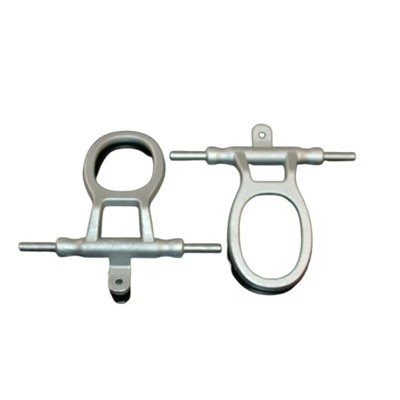
So if you’re shopping around for a reliable magnesium die casting supplier, someone who’s actually been in the shop grinding dies and casting parts, not just a sales guy who’s never touched a die, I’m your guy. No nonsense, no hidden fees, just straight talk about what works for magnesium. Shoot me a message, let’s talk through your part, and get it right the first time.
Precision CNC Machining References:
- Diet, G. E. (1999). Die Casting Design and Materials. ASM International.
- Krall, R., & Schaefer, S. (2018). Magnesium Die Casting: Process Optimization for Automotive Applications. Journal of Manufacturing Processes.
- American Die Casting Association (2020). Design Guidelines for Die Casting. ADC Technical Report.
Shenzhen Shunhaoda Technology Co., Ltd.
With abundant experience, we are one of the most professional magnesium die casting manufacturers and suppliers in China. If you’re going to buy bulk high quality magnesium die casting made in China, welcome to get free sample from our factory. Also, custom service is available.
Address: 902, Building A3, Tianrui Industrial Park, No. 35 Fuyuan 1st Road, Zhancheng Community, Fuhai Street, Bao’an District, Shenzhen
E-mail: sales@shdindustry.com
WebSite: https://www.shd-industry.com/
