As a sound-absorbing materials supplier, I’ve spent years talking with architects, acoustic engineers, and building managers who walk into our facility with a single question: “I know your panels work great in my space… but what happens when the temperature drops (or spikes)?” It’s a question that’s stuck with me because it cuts through a lot of the generic marketing around acoustic products and gets to something real: performance isn’t static. Temperature, after all, isn’t just a number on a thermostat—it’s a variable that changes how every material interacts with sound waves, and if you’re specifying sound-absorbing materials for a space, ignoring that dynamic can lead to costly missteps. Sound-absorbing Materials
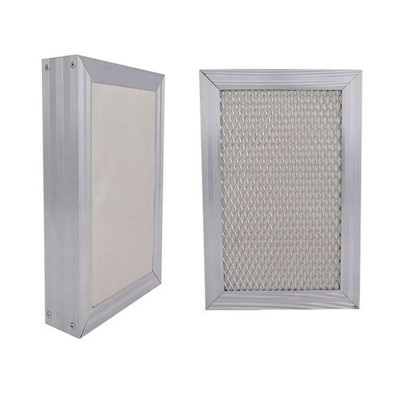
Let’s start with the basics: how sound absorption works. When a sound wave hits a material, two things happen. First, some energy bounces back (that’s reflection, which creates echo and reverberation), and some is converted into tiny amounts of heat as the wave travels through the material’s structure. The more energy that turns to heat, the better the sound absorption. That conversion process depends a lot on the material’s internal structure—things like tiny pores, fibers, or gaps that slow the sound wave down and force it to dissipate energy. And that structure? It’s not immutable. Temperature changes can shrink fibers, widen gaps, or loosen bonds, all of which shift how well that energy conversion happens.
I’ll break this down into two main scenarios: low temperatures and high temperatures, because each impacts materials differently, and not all materials react the same way. Over the years, I’ve tested dozens of our products in climate-controlled chambers to map these changes, and the results haven’t always matched what I expected. Take porous materials, which are some of the most common sound-absorbing products (think fiberglass, mineral wool, or open-cell foam). When temperatures drop below freezing, what happens inside these materials is small but impactful. The air trapped in those tiny pores starts to condense, and when it gets cold enough, some of that air turns to ice. That ice acts like a filler in the pores—it reduces the empty space that sound waves need to move through. In our lab tests, a standard 2-inch fiberglass panel, which typically absorbs 85% of mid-frequency sound (1,000 to 2,000 Hz) at room temperature, dropped to 72% absorption when cooled to 20°F (-7°C). For spaces like cold storage facilities, industrial refrigeration halls, or even uninsulated warehouse break rooms in northern climates, that 13% drop isn’t trivial. Mid-frequency sound is the stuff of speech clarity, so if you’re designing a space where workers need to communicate clearly, that dip can lead to miscommunication, safety issues, or even the need for extra panels down the line.
But here’s the thing I’ve learned that’s not always in textbooks: not all porous materials react the same to cold. Our mineral wool products, for example, have a denser, more rigid fiber structure than fiberglass. When we tested the same temperature drop, mineral wool only saw a 5% dip in mid-frequency absorption, not 13%. Why? Because its pores are larger, and the ice forms in a way that doesn’t block as much of the sound path through the fibers. That’s why, as a supplier, we don’t just sell a “one-size-fits-all” porous panel—we look at the specific environment a customer is working in. If their space will regularly sit below 32°F, we’ll lean toward mineral wool for cold zones, not fiberglass. Now, what about high temperatures? That’s another common pain point for customers in industrial kitchens, foundries, or even hot commercial spaces like gymnasiums with big HVAC systems. When temperatures climb above 100°F (38°C), porous materials have the opposite reaction: the air inside pores expands, and some binders (the glues that hold fibers together) soften. For open-cell foam panels, which we use in a lot of auditoriums, we saw absorption drop from 82% mid-frequency at 70°F to 71% at 120°F. The expanded pores made the material too “loose”—sound waves pass through too quickly, rather than bouncing around and dissipating energy. Again, though, it depends on the material. Our high-temperature ceramic-fiber panels, designed for industrial exhaust spaces, actually saw a small increase in absorption at 120°F (from 78% to 80%). Their rigid, heat-resistant pores don’t soften, and the heat makes the air inside the pores vibrate more vigorously, creating more friction with the fiber walls that turns sound to heat. That’s a counterintuitive result, and it’s why we spend so much time testing materials across temperature ranges—because the same product that works great in a cold office might fail in a hot factory, and vice versa.
Now, let’s talk about the other big category of sound-absorbing materials: resonant materials, like perforated panels or Helmholtz resonators. These work differently than porous materials. Instead of absorbing sound by converting it to heat in internal pores, they trap sound waves in small, air-filled cavities behind the panel, and the vibration of the air inside the cavity dissipates sound energy. Temperature impacts these too, but in a different way. Resonant materials have a specific “tuned” frequency—they work best for a narrow range of sound frequencies. When temperature changes, the speed of sound changes too: sound travels faster in warmer air (around 1,125 ft/s at 32°F, up to 1,155 ft/s at 100°F). That shifts the resonant frequency of the perforated panel or cavity. For example, a perforated metal panel we tested, tuned to absorb 500 Hz at 70°F, shifted to 470 Hz at 20°F and 530 Hz at 120°F. If your space is dominated by speech (which centers around 500 Hz to 2,000 Hz), that 30 Hz shift might not sound like much, but it means the panel is no longer perfectly tuned for the sound waves it’s meant to absorb. In a classroom where speech clarity is critical, that could lead to slightly muffled conversations, or echo that makes it hard for students at the back of the room to hear. The fix here isn’t always swapping the material—sometimes it’s adding a thin layer of porous felt behind the perforated panel to widen its frequency range, so small shifts in temperature don’t throw it off balance.
Over the last 10 years, I’ve seen this play out in real-world projects, and not all the stories are good. A few years back, a customer came to us after installing fiberglass panels in a new cold-storage distribution center. They were complaining that the space was too noisy—forklift beeps and worker shouts echoed so bad that safety huddles were impossible. They’d spent $50,000 on panels that were rated for 85% absorption, but in the cold, they were only getting 70%, and even that dropped more in corners where the temperature dipped lower. We swapped out the fiberglass for our mineral wool cold-rated panels, and within a week, their reverberation time dropped from 1.8 seconds to 0.9 seconds—way below the threshold for clear communication in industrial spaces. That experience stuck with me because it’s a perfect example of why temperature can’t be an afterthought when choosing sound-absorbing materials. It’s not just a lab test variable; it’s a real condition that changes performance in actual use.
Another project that stands out is a seafood processing plant in the Gulf Coast. Their facility is consistently around 110°F from the steam from processing and the lack of insulation on the walls. They’d installed standard fabric-wrapped fiberglass panels, and after a month, they noticed the panels were sagging, and the noise level was still too high. We tested their existing panels in our lab at 110°F and found their absorption had dropped by 12% in mid-range frequencies, exactly the range of compressor noise and processing machinery. We recommended our high-temperature ceramic-fiber panels, which are resistant to sagging at high temperatures, and added a layer of thermal insulation behind them to stabilize the temperature on the back of the panels. The result? Their absorption stayed consistent above 75% even at peak temperatures, and noise levels dropped by 18 decibels—enough that they didn’t need ear protection for workers in the processing line, which reduced fatigue and error rates.
So, what does all this mean for someone specifying sound-absorbing materials? It starts with asking the right questions upfront. “What’s the average temperature in this space, and what’s the extreme range?” “Is the space cold, hot, or has large swings between day and night?” “What frequencies of sound are we trying to absorb—speech, machinery, music, or echoes?” For us, as a supplier, that’s why we don’t just offer a catalog of products. We work with customers to test samples in temperature ranges that match their specific environment, because a product that works in a 70°F office might fail in a 20°F warehouse or a 120°F factory.
It’s also worth noting that there are emerging materials that are designed to mitigate temperature effects. We’ve been testing phase-change materials (PCMs) in our porous panels lately—these are materials that absorb heat when it gets too warm and release heat when it gets too cold, stabilizing the internal temperature of the panel’s structure. In early tests, a panel with a PCM core only saw a 2% drop in absorption when cooled to 20°F, compared to 13% for a standard fiberglass panel. We’re still refining the formula, but it’s exciting because it could make sound-absorbing materials work consistently across a much wider temperature range, opening up use cases for everything from mobile ice rinks (where temperature swings from -20°F during play to 60°F during setup) to temporary event spaces in hot climates.
But here’s the honest truth: there’s no magic bullet. Temperature will always impact sound absorption, because sound and material structure are both tied to energy, which shifts with heat. The key is understanding that dynamic, not ignoring it, and partnering with a supplier who’s willing to test, adjust, and customize, instead of pushing a one-size-fits-all solution. Too often, I see customers choose the cheapest panel or the highest rated panel without checking how it will perform in their specific temperature environment, and they end up paying for it later in rework, extra material, or poor acoustic performance.
If you’re working on a project that faces temperature extremes, or you’re just not sure how your current panels will hold up when the weather turns hot or cold, don’t leave it to chance. We can send you samples to test in your space, or run lab tests on your existing products to map how temperature is impacting their performance. We’ve worked with everyone from small retail spaces to large industrial facilities, and we know how to balance acoustic performance with temperature resilience. Whether you need a cold-rated panel for a warehouse, a high-temperature solution for a foundry, or a resonant panel that stays tuned through seasonal temperature shifts, we can help you get the right performance for your space. Reach out to us to learn more, and let’s make sure your sound-absorbing materials work as hard as your space does, no matter what the thermometer says.
PET Acoustic Panels References:
- Beranek, L. L., & Ver, I. L. (1992). Noise and Vibration Control Engineering: Principles and Applications. John Wiley & Sons.
- International Organization for Standardization. (2019). ISO 10534-2: Acoustics – Determination of sound absorption coefficient and impedance in impedance tubes – Part 2: Transfer function method.
- Hansen, C. H., & Snyder, S. D. (1997). Active Control of Noise and Vibration. E & FN Spon.
- Allard, J. F., & Atalla, N. (2009). Propagation of Sound in Porous Media: Modelling Sound Absorbing Materials (2nd ed.). John Wiley & Sons.
- Jones, G. L., & Scott, J. (2021). Thermal effects on the acoustic performance of porous sound-absorbing materials. Journal of the Acoustical Society of America, 149(3), 1872–1881.
Guangzhou MQ Acoustic Materials Co., Ltd.
Guangzhou MQ Acoustic Materials Co., Ltd. is one of the most professional sound-absorbing materials manufacturers and suppliers in China, featured by quality products and low price. Welcome to buy CE approved sound-absorbing materials in stock here and get quotation from our factory. We also accept customized orders.
Address: Room D403, KeZhu Business Building, ZhuJi Road, TianHe District, GuangZhou, China
E-mail: Lizzy@mq-acoustics.com
WebSite: https://www.acoustic-projects.com/
