Hey everyone, thanks for swinging by! If you’ve ever dabbled in fiber optics for home networking, small business setups, or even that random home lab project you’ve been tinkering with, chances are you’ve crossed paths with a SC fiber pigtail. I’m Mike, and I’ve been working in the fiber pigtail game for over 8 years now—spent half that time sourcing, troubleshooting, and helping folks pick the right gear for their needs. Today, I’m breaking down exactly what a SC fiber pigtail is, why it matters, and how it fits into the big picture of your fiber network. No jargon overload, promise—just straight talk from someone who’s actually dealt with these things on the jobs. Fiber Pigtail

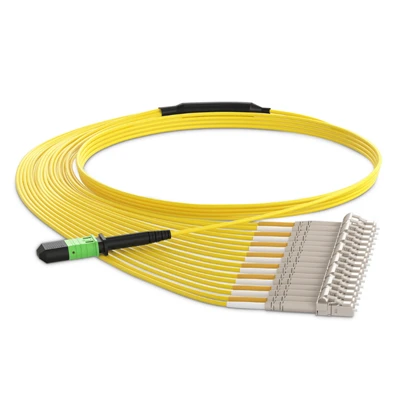
First, let’s start with the basics: a fiber pigtail, in general, is a short length of fiber optic cable that has one end pre-terminated with a connector, and the other left bare—just the glass fiber with a jacket stripped back. Think of it like this: if your fiber network is a big puzzle, the pigtail is the little piece that lets you snap two parts together without fumbling with splicing or messy terminations on-site. Now, a SC pigtail is just the version that uses a SC connector. That’s the square, snap-in connector you’ve probably seen labeled on fiber patch panels or wall jacks—way different from the round LC connectors or big ST twist-lock ones.
Let’s dive into the SC part, because that’s where a lot of people get confused. SC stands for “Subscriber Connector,” though some old-timers still call it “Standard Connector.” It was developed back in the 1980s by NTT, the big Japanese telecom company, and it blew up because it’s super easy to use—no tools needed to lock it in, just a gentle push and a click. That click is a big deal; it tells you it’s seated properly, which cuts down on loose connections that cause signal drops. I’ve seen so many techs waste hours troubleshooting a “no signal” issue just because a connector wasn’t clicked in right—SC’s click eliminates almost all of that guesswork.
Now, the pigtail part: how short is short? Typically, SC pigtails are anywhere from 30 cm to 2 meters long. The length depends on what they’re for. For example, if you’re wiring a patch panel in a server room, you might use a 1-meter pigtail so it’s long enough to reach the port without being too floppy. If you’re doing a tiny home setup, a 30 cm pigtail works because it’s just connecting a modem to a wall plate. The other end is bare, so you can splice it to the main fiber run using a fusion splicer— that’s the machine that melts two fiber ends together to create a permanent, low-loss connection. Or, if you’re using a quick connect splice, you can cap the bare end for a temporary setup. That bare end is key because it’s what makes the pigtail versatile—you can adapt it to whatever your specific installation needs are.
Next, let’s talk about the types of SC pigtails, because not all are created equal. There are two main fiber types: single-mode and multimode. Single-mode is for long-distance runs—like across a campus or between buildings—because it uses a tiny core (around 9 microns) that lets light travel straight, with almost no signal loss. Multimode is for short distances—within a single office, or a home network where the farthest run is under 500 meters—with a bigger core (50 or 62.5 microns) that’s easier to work with but loses light faster over distance. I’ve dealt with both, and it’s super important to pick the right one for your job. Using a single-mode pigtail for a home office would be overkill, but using multimode for a 2-kilometer warehouse run would mean you get signal loss mid-way. That’s a mistake I see people make all the time, so trust me on this.
Also, SC pigtails come in simplex and duplex versions. Simplex is just one fiber, for one-way communication—like connecting a single camera to a network recorder. Duplex is two fibers, for two-way communication—so when you send data, you can get it back, which is what most internet connections use. I keep both in stock, and I always ask customers whether they need simplex or duplex before quoting—way better than having them come back because they ordered the wrong one.
Now, why would you use a SC pigtail instead of just terminating the fiber yourself? Let’s be real: terminating fiber is not like cutting Ethernet cable. If you mess up, you can’t just crimp it again—you have to polish the end of the fiber to a mirror-like finish, and even a tiny smudge can cause signal loss. For beginners, that’s a nightmare. Even for experienced techs, pre-terminated pigtails save time and reduce mistakes. I’ve seen a crew spend 2 hours terminating 10 fibers when they could’ve grabbed 10 pre-made SC pigtails and had them done in 15 minutes. That time adds up, especially on big jobs. Plus, pigtails are tested at the factory—so you know the connector is aligned properly and the signal loss is within acceptable limits (usually less than 0.3 dB, which is super low). If you terminate it yourself, you might not have a way to test it right there on-site, leading to more troubleshooting later.
Another big use case: patch panels. Almost every fiber patch panel uses SC connectors, right? You mount the panel in a rack, then plug the SC pigtails into the ports, and splice the other end to your main fiber trunk. That keeps your patch panel organized—no loose fiber ends floating around, no messy spliced connections exposed. I’ve had customers tell me that switching to pigtails cut their rack time in half, because they don’t have to juggle loose fibers and tape them down every time they add a new device.
Wait, but let’s get real about common misconceptions. A lot of people mix up SC with LC connectors. LC is smaller, so you can fit more ports on a patch panel, which is great for dense setups. SC is bigger, but more durable—perfect for high-traffic areas where connectors might be bumped. I’ve had customers ask for both, depending on the job: if it’s a small home office with only 4 ports, LC is fine, but if it’s a warehouse where people are moving equipment around, SC is the way to go. That’s not to say LC is bad—just that each has its place. And pigtails come in both, but today we’re sticking to SC.
Now, as someone who supplies these, let me give you a few tips if you’re in the market for SC pigtails. First, check the jacket. You don’t want a flimsy jacket for outdoor use—get a riser or plenum-rated jacket if it’s going in a building’s air handling space, or a gel-filled outdoor-rated jacket if it’s buried or aerial. Second, pay attention to the bend radius. Fiber is delicate—if you bend it too tight, it can break the glass inside. Make sure your pigtails have a minimum bend radius listed, and don’t kink them when installing. I’ve seen way too many techs yank a pigtail into a rack and break the fiber inside—save yourself the hassle and check the specs. Third, order extra. On any job, you’ll mess up one or two pigtails, or need an extra for a last-minute addition. I always recommend ordering 10-15% more than you think you need—better to have extras than to pause a project waiting for a new shipment.
Let’s talk about signal loss, because that’s the biggest pain point with fiber. A good SC pigtail will have insertion loss less than 0.3 dB, which means you lose almost no signal when you plug it in. If you’re getting more than that, it’s usually because the connector is dirty, or not seated properly, or the fiber end is scratched. I always keep a fiber cleaning kit on hand—you can’t just wipe a SC connector with a paper towel; that leaves lint. Use a lint-free wipe or a cleaning pen, and you’ll keep loss low. That’s a quick fix that saves so much time.
Now, who uses SC pigtails? Let’s list a few—small businesses setting up their office internet, home labs (I know a lot of you out there), security camera systems, campus networks, data centers, even medical equipment that uses fiber for reliable signal. It’s not just for big telecom companies anymore. I’ve had customers who run a small café use SC pigtails to connect their POS systems to the internet, and another who’s a hobbyist building a fiber-powered aquarium setup—yes, that’s a real thing. The versatility is why SC pigtails are still one of the most popular connectors out there, even after 40 years.
Wait, let’s address something I hear all the time: “Do I really need a pigtail? Can’t I just connect two fibers directly?” You can, but it’s called a splice, and it’s not as easy as it sounds. If you’re connecting two long fiber runs, a splice is fine, but for connecting to a port or a patch panel, you need a connector. The pigtail gives you that connector pre-made, so you don’t have to terminate the big trunk cable. It’s like having a pre-attached plug for your laptop instead of having to strip the wires every time you want to plug it in. Makes sense, right?
Now, if you’re reading this and you need SC pigtails for a project—whether it’s small, medium, or huge—I’ve got you covered. I stock single-mode and multimode, simplex and duplex, different jacket types and lengths. No minimum order, no hidden fees, and all my pigtails are tested before they leave the warehouse. I’ve worked with everyone from a guy building a home lab in his garage to a big construction company wiring a new office park. If you’re not sure which type you need—single vs multimode, simplex vs duplex—just hit me up, I can walk you through it. I’d rather you get the right product than the wrong one, even if that means a 10-minute chat.
Before I wrap this up, let’s recap the key points to make sure you don’t forget: a SC fiber pigtail is a pre-terminated short fiber cable with a square, snap-in SC connector on one end and bare fiber on the other. It’s easy to use, durable, and saves time on installations. You’ve got single-mode for long runs and multimode for short runs, simplex for one-way and duplex for two-way. It’s one of the most reliable connectors in fiber optics, and it’s used in tons of setups beyond just big telecom jobs.
If you’re ready to order, or just have questions, feel free to reach out for a chat. No sales pitches, no pressure—just someone who knows their stuff and wants to help you get the right gear for your project. And if you’re still on the fence, go look at your current fiber network—chances are, the patch panels or wall jacks use SC connectors, so a SC pigtail is exactly what you need.
Thanks for sticking with me through this—next time we’ll talk about how to clean fiber connectors without messing them up, a trick I’ve learned the hard way over the years. Catch you later!
Fiber Optic Box References
- Fiber Optic Association. Fiber Optic Connectors: An Overview. FOA Publications, 2022.
- NTT Electronics. SC Connector: History and Design Specifications. NTT Technical Review, 1987.
- Corning Incorporated. Fiber Pigtail Types and Installation Best Practices. Corning Fiber Solutions, 2021.
- Telecommunications Industry Association. TIA-568-C.3 Standard for Fiber Optic Cabling. TIA Standards, 2018.
- Mike’s Fiber Shop. 8 Years of Field Notes: Common SC Pigtail Mistakes and Fixes. Internal Technical Document, 2024.
Shenzhen Dimi Telecommunications Co., Ltd.
As one of the most professional fiber pigtail manufacturers and suppliers in China, our products have good reputation in the market. Please rest assured to wholesale advanced fiber pigtail made in China here from our factory. Also, custom service is available.
Address: China
E-mail: sales@dimifiber.com
WebSite: https://www.dimi-fiber.com/
