Hey there, let’s cut to the chase – if you’ve ever stood in front of a conventional lathe, fingers hovering over the speed dials, wondering why that fresh brass billy spun way too fast for your 1/8 inch cut, you’re not alone. I’ve been selling conventional lathes for 12 years now, and every single week, someone messages me panicking about getting the speed right. It’s not rocket science, but it’s also not just “turn a dial and go” – skip a step, and you’ll ruin a part, or even mess up the lathe itself. Conventional Lathe

First, let’s get one thing straight: when people ask “how to adjust speed on a conventional lathe,” they’re usually mixing two different things. There’s the speed you set on the lathe (the spindle RPM) and the cutting speed (the surface speed of the material you’re machining). A lot of new operators – or even guys who’ve had a lathe for 5 years – don’t know these aren’t the same. That’s where mistakes start. I see it all the time: someone cranks the spindle to the highest number, grabs a 1/4 inch carbide tool, and wonder why it’s smoking the aluminum. Spoiler: that’s way too fast.
Let’s break this down like I’m showing you over a cup of coffee after you pick up your new lathe from my shop. No jargon, just what actually works.
First step before you even touch a dial: grab a notebook (or your phone, no judgment) and jot down three things: the material you’re cutting, the tool you’re using, and the diameter of the part you’re turning. Those are the big three that tell you what speed you need. For example, if you’re turning soft aluminum with a coated carbide insert? You want a surface speed around 300 surface feet per minute (SFM). If you’re turning mild steel (1018) with a high-speed steel (HSS) tool? That’s more like 150 SFM. Titanium? Maybe 50 SFM max – don’t even think about cranking that up.
Now, here’s the math part – and I promise it’s easier than splitting a beer. The formula to get spindle RPM from SFM is super simple: RPM = (12 × SFM) ÷ (π × diameter). Let’s test that with a 2-inch diameter aluminum part, 300 SFM. Plug in the numbers: (12 × 300) = 3600. π is ~3.14, so 3.14 × 2 = 6.28. 3600 ÷ 6.28 is roughly 573 RPM. Got it? That’s your target speed, not the number on the dial. This is the part I drill into every customer when they pick up a lathe from me – skip the math, and you’re guessing, which wastes time and material.
Okay, now you’ve got your target RPM. Time to actually adjust the lathe. Conventional lathes – the good ones, anyway – have a gearbox, right? No fancy variable speed stuff here (that’s the CNC or combo lathes we also sell, but conventional is all gear-driven, which is why they’re reliable). So the gearbox has a bunch of gears, and to change speed, you move gear levers around to line them up. Wait – a lot of new guys think the speed dials are the only thing, but no, most conventional lathes have two sets of gears: one in the headstock, and sometimes a belt adjustment? No, wait, let’s not confuse belt-driven old lathes with the modern conventional lathes we supply. Belt-driven old South Bend might have a pulley you move, but the conventional lathes we sell are all quick-change gearbox style for speed adjustment.
Wait, let’s correct that for accuracy: there are two common types of conventional lathes when it comes to speed adjustment: belt-driven (older, lower horsepower, good for small jobs) and gear-driven (higher torque, better for heavy cuts, which is what most of our customers run). If you’re on a gear-driven model, the steps are: first, make sure the lathe is off and unplugged. Do NOT adjust gears while it’s running – that’s a fast track to broken gears, and I’ve seen guys lose a finger doing that. Safety first, always.
Once it’s off, open the headstock guard (it’s that metal cover over the gearbox, usually held on by two bolts or a latch). Inside, you’ll see a bunch of gear levers – some have numbers, some don’t, but every conventional lathe’s manual has a speed chart taped inside that guard. That chart pairs the lever positions with RPM. So if your target is 573 RPM for that aluminum part, find where 573 is on the chart, line the levers up to the numbers that match, close the guard, and you’re set.
But wait – what if you’re on a belt-driven conventional lathe? That’s usually the smaller benchtop models, right? For those, you loosen the bolt holding the drive belt on the stepped pulley, slide the belt to a higher or lower step on the pulley, then tighten the bolt back up. Easy, but again – check the chart, don’t just move the belt blindly. I had a guy last month bring in his benchtop lathe he bought off Craigslist, messed up the belt alignment, and burned out the motor. Save yourself $200 for a new motor, check the chart.
Now, here’s the pro tip I only tell my regular customers – and you, since you’re here. A lot of conventional lathes (even ours) have a “slow speed range” and a “high speed range.” Most people just use the high range, but for heavy cuts on large diameter parts, you want the slow range. Let’s say you’re turning a 6-inch diameter steel billet with an HSS tool. The math says RPM = (12×150) ÷ (3.14×6) = ~95 RPM. If you’re in the high speed range, that’s usually a range of 500 to 2000 RPM, so you’d have to crank the dial way down to get 95, which strains the motor. But switch to the low speed range, you get 50 to 500 RPM, so you can set it right at 95, way easier on the lathe and your cuts are cleaner. I can’t tell you how many parts my customers have saved just by remembering to switch ranges first before messing with the dials.
Wait, what about when you’re facing the end of a part, instead of turning it? Facing is a different operation, right? For facing, the outer diameter of the part gets smaller as you cut, so the surface speed changes. That means you might need to adjust speed as you face, or – here’s a hack I use – set the speed based on the largest diameter of the part, so you don’t have to mess with it mid-job. I see guys messing with the speed every two minutes while facing, which is a waste of time; just lock it in at the biggest diameter, it’ll be a tiny bit faster at the end, but for most jobs, that’s negligible.
Now, common mistakes I see all the time (and you know what, I made most of these when I was 18 running my first lathe):
-
Ignoring the tool material. If you’re using HSS tools, you can’t run as fast as carbide. A lot of new guys grab whatever tool is in the holder, check SFM, and go – nope, HSS is half the speed of carbide. That’s why I always tell customers to label their tool holders: “HSS = 150 SFM max,” “Carbide = 300 SFM max” – saves so much guesswork.
-
Adjusting speed while the lathe is running. I’ve already mentioned the finger thing, but also – the gears can break, and a broken gear on a conventional lathe? That’s $300 for a replacement, plus labor to install. Not worth rushing.
-
Forgetting to switch speed ranges first. That 95 RPM for the 6-inch steel part? If you’re in the wrong range, you might not even be able to get that low, or you’ll have the motor straining so hard it stalls. Stalling a conventional lathe is fine for small stuff, but if you’re running a heavy cut, stalling can warp the part.
-
Skipping the math. I get it, math sucks. But if you skip the math, you’re guessing. One customer last year guessed 1000 RPM for a 4-inch mild steel part, burned up his HSS tool in 5 minutes, and wasted an hour of material. The math would’ve told him he needed ~143 RPM, easy.
Now, if you’re working on a vintage conventional lathe – not the ones we supply, the old 1950s South Bend or Atlas you picked up at a flea market – there’s a trick for those too. A lot of old lathes don’t have a speed chart inside the guard, so you can grab a tachometer (cheap, like $20 on Amazon) and measure the actual RPM while you adjust the levers. That way you don’t have to guess. We actually sell tachometers as an add-on for our conventional lathes, because a lot of our customers like working on both new and old models.
Wait, let’s circle back to why conventional lathes are still so popular, even with all the CNC stuff out there. They’re reliable, cheap to maintain, and for small batch jobs or custom parts, you can adjust on the fly way easier than a CNC. But that reliability only works if you adjust the speed right – push it too fast, and you’ll have problems; too slow, and your cuts are rough and take twice as long.
If you’re thinking about picking up a new conventional lathe, or upgrading the one you’ve got, just so you know – we’ve got all kinds, from benchtop 10-inch models perfect for hobbyists, to 20-inch heavy-duty ones for production shops. No weird proprietary parts, no fancy software, just straightforward lathes that work the way they should. And if you’ve got questions about speed adjustment, or anything else, hit us up to chat. We don’t do pushy sales stuff – just guys who’ve been in the machine shop game for decades, happy to help.
Wait, one last thing for the new operators: when you first fire up the lathe after adjusting speed, stand to the side, not in line with the part. If a piece of chip flies off at high speed, you don’t want it in your face. Small safety tip, but it’s saved more than one person from a trip to the urgent care.
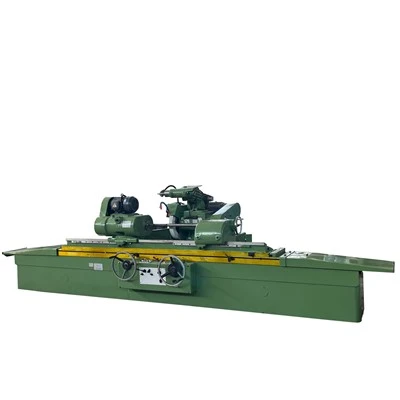
Okay, that’s pretty much it. Speed adjustment on a conventional lathe isn’t hard – just follow the math, be safe, use the right range, and double-check the gear positions. If you’re still confused, or looking for a lathe that makes this stuff easy, reach out to us to talk through your needs. We’re here to make sure you don’t make the same mistakes I did when I was first messing with lathes back in the day.
Horizontal Machining Center References:
- Machinist’s Handbook, Industrial Press Inc., 2020
- Conventional Lathe Operation and Maintenance Guide, National Tooling and Machining Association, 2022
- Surface Speed Calculations for Turning Operations, American Society of Mechanical Engineers, 2019
- Safety Standards for Machine Tools, Occupational Safety and Health Administration (OSHA), 2021
Henan Rowdai Machinery Equipment Co., Ltd.
As one of the most professional conventional lathe manufacturers in China, we’re featured by quality products and good price. Please rest assured to buy high-grade conventional lathe for sale here from our factory. If you have any enquiry about cooperation, please feel free to email us.
Address: Building 9, E-Commerce Industrial Park, High-Tech Zone, Zhengzhou, Henan, China
E-mail: rowdai@rowdai.com
WebSite: https://www.rowdai.com/
