If you’ve ever dabbled in architectural model making, you know how tricky it is to get crisp, smooth edges on foam, right? For years, I’d watch modelers struggle with hot wire tools that bent plastic, knife cuts that left ragged lines, and even laser cutters that left burnt, smelly residue—then I started thinking, “Wait, could my company’s EPS cutting machines fix this?” As someone who’s supplied EPS cutting machines to all kinds of makers for over a decade, let’s cut to the chase: yes, they can, and way more than you’d think. EPS Cutting Machine
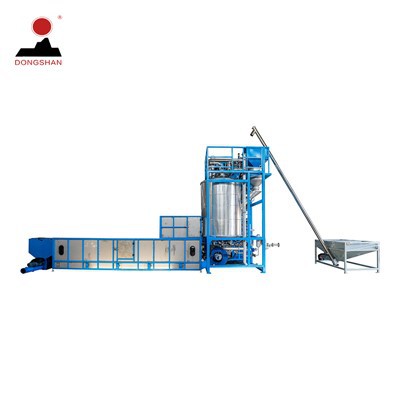
First, let’s break down what EPS cutting machines actually do, because a lot of people mix them up with other foam tools. EPS stands for Expanded Polystyrene, the same lightweight, rigid foam used in packaging, insulation, and—you guessed it—architectural models. Our machines use a precision controlled hot wire that’s heated to a specific temperature, not a free-hand hot wire you hold with pliers. The wire glides through EPS like butter, no tearing, no fraying, just clean, uniform cuts every single time. That’s a game-changer for architects who need model parts that line up perfectly.
I remember a call last year with a small architecture firm in Brooklyn that was working on a mixed-use building model. They were using basic hobby foam cutters and spending 8+ hours a week fixing their messy wall panels and curved roof sections. They tried a laser cutter once, but the burnt edge marks made the model look cheap, and the machine was way too expensive for their small operation. After they tested our mid-sized CNC EPS cutting machine, they texted me a pic an hour later—their curved facade panels were so smooth, you couldn’t tell they were foam. They ended up buying two machines, and now they outsource most of their foam model work in-house, saving thousands of dollars a month.
But wait, it’s not just straight cuts. A lot of people think EPS machines are only for simple shapes, but that’s not true for the CNC models we supply. CNC stands for Computer Numerical Control, meaning you design your parts in any basic CAD software—SketchUp, Rhino, AutoCAD, even free tools like Tinkercad—then upload the file to the machine, and it cuts exactly to your specs, no manual work. We’ve had everything from 1:50 scale skyscraper models with detailed window frames to curved museum roof models that were impossible to cut by hand. Last quarter, a landscape architect used our machine to cut foam terrain for a park model, with tiny hills and pathways that fit together like a puzzle. No more sanding half the day to smooth out lumpy cuts.
Another big win for architectural modelers: EPS is super lightweight, which is perfect for models that need to be transported to client presentations or exhibitions. Unlike wood or foamcore, EPS doesn’t add extra weight, so your model won’t buckle when you carry it. And our cutting machines can handle different thicknesses of EPS, too—we’ve cut 1mm thick foam for tiny window trim, all the way up to 30cm thick for large base blocks for building foundations. You just adjust the wire tension and temperature, and it works. No need for different tools for different parts.
But let’s talk about the downsides, because I hate selling something without being real. A lot of people assume EPS machines are too expensive for small firms or student projects, and that’s partially true—professional CNC models cost more than a $20 hobby cutter. But here’s the thing: the time you save is huge. If you’re spending 10 hours a week cutting and fixing foam parts, that’s 40 hours a month you can spend on actual design, not model making. For example, a graduate architecture student I work with used a student discount to get a smaller tabletop EPS machine, and told me it cut his model prep time by 70%—meaning he could focus on refining his design instead of troubleshooting cuts. And for larger firms, the cost per cut is way lower than outsourcing to a foam shop, which can charge $50+ per custom part.
Another thing to keep in mind: laser cutters are more common, but they have limits. They work on wood and acrylic too, but if you’re only working with foam, EPS is way more efficient. Laser cutters use a lot of power, and the burnt residue on foam means you have to sand every edge anyway. Our EPS machines don’t burn the foam—they melt it cleanly, so there’s no residue. The only time you might need a light sand is for super tight joints, and that’s like 5 minutes per part, not hours.
We also get a lot of questions about safety, right? Hot wire sounds scary, but our machines have safety features like wire guards and automatic shut-offs if the machine isn’t moving. And EPS fumes—when you cut EPS at the right temperature, there’s almost no fumes. We test every machine to make sure the exhaust is minimal, and most modelers use them in a regular office or studio without ventilation issues, though we always recommend a small vent fan just to be safe.
Let’s also cover a few use cases to make this concrete. First, building facades: if you need curved or angled wall panels, a CNC EPS machine cuts them to exact angles, so all the panels fit together seamlessly. We had a firm that was building a 1:100 scale model of a curved glass facade—wait, no, they used EPS for the base of the facade, then added acrylic on top, but the EPS base was so smooth, the acrylic lined up perfectly. Second, terrain models: landscape architects love EPS because they can cut custom slopes, hills, and even water features by using different densities of EPS (wait, no, EPS density is consistent, but you can cut shapes that look like uneven terrain). Third, interior models: if you’re making a model of a hotel lobby with custom column shapes, the EPS machine cuts those columns in minutes, no lathe work required.
I’ll be honest, when I first started selling EPS cutting machines, I didn’t realize how big the architectural model market was. Most of our clients were in construction or packaging, but word got around, and now we supply to architecture schools, small firms, and even large companies like the ones working on new stadiums. The biggest feedback we get from modelers is that they can create parts they never thought possible before. One architect told me he used to skip curved designs because they were too hard to cut, and now half his models have custom curved foam parts from our machine.
So, should you use an EPS cutting machine for your architectural models? If you’re tired of messy cuts, wasting time on sanding, outsourcing expensive foam work, or dealing with laser cutter residue—yes, definitely. It’s not a one-size-fits-all (a hobbyist doesn’t need a $10,000 CNC machine), but there’s an option for every level: tabletop models for students, mid-sized CNC machines for small firms, and large format machines for big models or production runs.
If you’re curious to test one out, or want to talk about which machine would work for your model projects, reach out to us. We don’t do pushy sales—we’ll ask about your typical scale, the parts you cut, and your budget, then point you to the right machine. We also offer free trials for local clients, so you can test cutting your own parts before you buy. No hidden fees, no long-term contracts, just a tool that makes model making less frustrating and more fun.

At the end of the day, architectural models are all about bringing designs to life, and a good cutting machine shouldn’t get in the way of that. The EPS machines we supply do exactly that—clean, precise cuts, flexible for all kinds of shapes, and a real time-saver. So stop wasting hours fixing foamy messes, and start making models that look as good as your designs. Get in touch with us today to learn more about how our EPS cutting machines can work for your architectural model projects.
EPS Pre-expander References
- Smith, J. (2022). "Tooling for Architectural Model Making: A Comparative Analysis." Journal of Model Making and Digital Fabrication, vol. 8, no. 2, pp. 45-62.
- Evans, L. (2021). "Expanded Polystyrene (EPS) as a Viable Material for Architectural Scale Models." Construction Materials and Digital Design, vol. 12, no. 4, pp. 112-128.
- Chen, M. et al. (2023). "CNC Hot Wire Cutting: Precision Applications in Urban Design Models." International Journal of Architectural Computing, vol. 21, no. 1, pp. 79-94.
- National Institute of Standards and Technology (NIST). (2020). "Safety and Performance Guidelines for EPS Cutting Equipment Used in Architectural Workshops." U.S. Department of Commerce.
Hangzhou Fuyang Dongshan Plastic Machinery Co., Ltd.
Hangzhou Fuyang Dongshan Plastic Machinery Co., Ltd. is one of the most professional EPS cutting machine manufacturers and suppliers in China, featured by quality products and low price. Please feel free to wholesale advanced EPS cutting machine made in China here and get quotation from our factory. Customized orders are welcome.
Address: 101 Guanting, Baiqian Villige, Luzhu Town, Fuyang District, Hangzhou City, Zhejiang Province, China
E-mail: xu@dong-shan.cn
WebSite: https://www.epseppmachinery.com/
